Snake Plant Care: Light, Watering, Soil and Problems
Snake plant care indoors: how much light and water it needs, the best soil and pot, repotting, and fixing leaves that fall over, wrinkle or turn mushy.

On this page
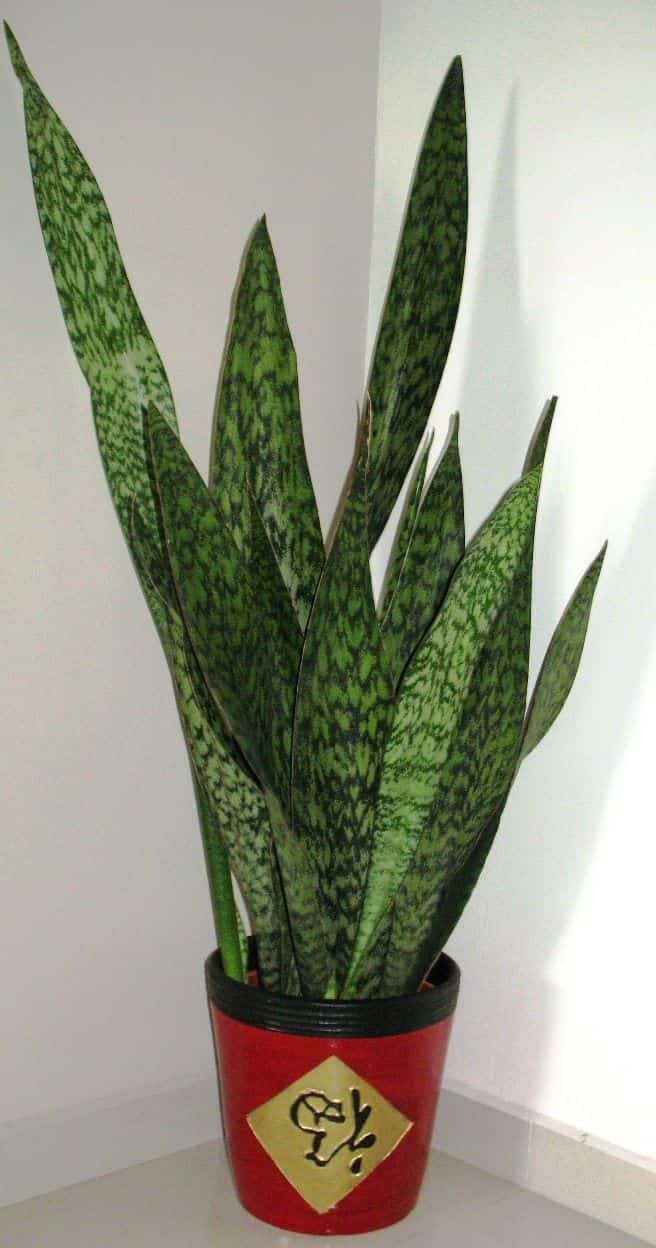
Snake plant care, in short: give it bright, indirect light if you can (it tolerates low light), let the soil dry out completely before watering, and grow it in a gritty, fast-draining mix in a pot with a drainage hole. Feed lightly a few times in spring and summer and repot only every few years. Snake plants are famously hard to kill. The one thing that reliably does it is too much water.
Snake plant is the common name for plants formerly called Sansevieria, now classified under Dracaena (the classic is Dracaena trifasciata). You'll see both names on labels.
Snake plant care at a glance
| Need | What works |
|---|---|
| Light | Bright, indirect is best. Tolerates low light and some direct sun. |
| Water | When the soil is completely dry |
| Soil | Gritty, fast-draining succulent or cactus mix |
| Pot | Drainage hole essential. Terracotta helps. |
| Humidity | Any normal home humidity |
| Temperature | Ideally 15–29 °C. Protect from cold below about 10 °C. |
| Feeding | Diluted feed 2–3 times in spring–summer |
| Repotting | Every 2–4 years |
| Pets | Toxic to cats and dogs (ASPCA) |
Popular snake plant varieties
| Variety | Look | Note |
|---|---|---|
| Dracaena trifasciata | Tall, banded green leaves | The classic |
| 'Laurentii' | Yellow leaf edges | Needs a bit more light to keep its edges bright |
| 'Hahnii' (bird's nest) | Short rosettes | Good for desks and shelves |
| 'Moonshine' | Silvery-green leaves | Slower, likes brighter light |
| Cylindrical snake plant (Dracaena angolensis) | Round, spear-like leaves | Often sold braided |
| 'Whale Fin' (Dracaena masoniana) | One or two very wide leaves | Very slow |
Light
Snake plants are adaptable. They survive in low light, which is why they're on every very low light plants list, but they grow faster and stand straighter in bright, indirect light. They can handle some direct sun once used to it, but sudden full sun after a dim spot can scorch leaves.
If you're not sure what light you have, take a reading with a phone light meter and put it into our plant light meter converter. Snake plants manage in the "Low light" band (50–250 foot-candles) and grow well in "Medium" and "Bright indirect".
Watering: the key to snake plant care
Snake plants store water in their thick leaves and roots. They're adapted to dry conditions, and wet soil quickly rots them.
Water only when the soil is completely dry. Push a finger or wooden skewer deep into the pot. If any dampness remains, wait. When you do water, soak it until water drains, then empty the saucer.
Our watering schedule builder suggests these starting check intervals:
| Setup (15 cm pot) | Check soil every |
|---|---|
| Low light, plastic pot, spring–summer | 20 days |
| Medium light, plastic pot, spring–summer | 14 days |
| Medium light, terracotta pot, spring–summer | 12 days |
| Bright light, plastic pot, spring–summer | 11 days |
| Medium light, plastic pot, autumn–winter | 21 days |
Check, don't water. Many snake plants only need water once a month or less in winter.
Signs of overwatering
- Soft, mushy leaf bases
- Leaves falling over or collapsing outwards
- Yellowing leaves with a translucent look
- A bad smell from the soil
Signs of underwatering
- Wrinkled, thin or curling leaves
- Leaves that feel soft but not mushy
- Brown, dry tips
- Soil pulled away from the pot
Underwatering is easy to fix with a thorough soak. Overwatering is not, so err on the dry side.
Best soil for snake plants
Use a fast-draining mix. A cactus and succulent mix works, especially with extra grit. Our soil mix calculator has a gritty succulent recipe: 50% cactus soil, 40% pumice or perlite and 10% coarse sand or grit. For 3 litres, that's 1.5 L cactus soil, 1.2 L pumice or perlite and 0.3 L grit. A general mix with plenty of added perlite also works if that's what you have.
Our houseplant soil mix guide explains why different plants need different mixes.
Pots and repotting
Snake plants like being a little crowded. Repot every 2–4 years, in spring, when roots fill the pot, the pot is cracking or bulging, or pups are crowding the edge.
- Go up just a little. From a 15 cm pot, the repotting pot size calculator suggests 19 cm (range 17–20 cm).
- Use a heavy pot. Tall snake plants are top-heavy. Terracotta or ceramic stops them tipping over and helps soil dry.
- Don't water immediately. Wait about a week after repotting so any damaged roots can heal.
Our how to repot a houseplant guide walks through the process.
Feeding
Feed with a balanced or cactus fertilizer at half strength two or three times between spring and late summer. Don't feed in winter. Our fertilizer dilution calculator works out the dose from your label.
Propagating snake plants
- Division: the easiest method. When repotting, separate pups with their own roots and pot them up.
- Leaf cuttings in water or soil: cut a leaf into 5–8 cm sections, keep them the right way up, let them callus for a day or two, and stand them in water or gritty mix. It's slow, often a month or two for roots and longer for a new shoot. Variegated varieties like 'Laurentii' usually lose their yellow edges when grown from leaf cuttings.
Snake plant problems
Leaves falling over
Check the base of the leaf:
- Soft and mushy: root or leaf-base rot from overwatering. Remove the plant, cut away rotten parts, let the healthy parts dry and repot in dry gritty mix. Propagate healthy leaf sections if the roots are gone.
- Firm but leaning or bent: too little light, or the leaf has been knocked or creased. More light helps new leaves grow straighter. Damaged leaves won't straighten, but you can tie them loosely or remove them.
Wrinkled or curling leaves
Usually thirst. Soak the soil well. If the soil is wet and leaves still wrinkle, the roots have rotted and can't take up water.
Brown tips
Common and usually harmless. Causes include irregular watering, a leaf tip being damaged, or salt build-up. Trim with clean scissors following the leaf's shape if it bothers you. Don't cut straight across the whole tip, as the plant won't regrow it.
Yellow leaves
Almost always overwatering. Let the pot dry out fully and reduce watering.
Pests
Snake plants are fairly pest resistant, but mealybugs and spider mites can appear. Wipe leaves and treat with a houseplant pest product if needed.
Snake plant care outdoors
In warm, frost-free climates, snake plants grow outdoors in partial shade. Elsewhere, they can go outside in summer in a sheltered spot, but must come in before nights get cold. Introduce them to outdoor light gradually, as direct sun can scorch leaves grown indoors.
Snake plant myths
- "Snake plants purify the air of a whole room." The famous NASA experiments used small sealed chambers. In a normal, ventilated home, the effect of a few plants on air quality is negligible. Grow one because it looks good and is easy.
- "They never need water." They need far less than most plants, not none. A plant left dry for many months will wrinkle and decline.
- "Bigger pots mean faster growth." For snake plants, a big pot mostly means wet soil and rot.
Snake plant care checklist
- Bright, indirect light if possible, any light otherwise
- Water only when the soil is completely dry
- Gritty mix and a pot with drainage
- Feed 2–3 times in spring and summer, never in winter
- Repot only every 2–4 years
- Keep away from pets that chew plants
Sources and further reading
- ASPCA Toxic and Non-Toxic Plants list, where snake plant is listed as toxic (as mother-in-law's tongue).
- Royal Horticultural Society, for Dracaena (Sansevieria) cultivation.
- NC State Extension Gardener Plant Toolbox, species profile and care notes.
Compare it with the other champion of neglect in our ZZ plant care guide.
Frequently asked questions
How often should you water a snake plant?
Only when the soil has dried out completely. In medium light in spring and summer that's often every two to four weeks. In winter or low light, it can be a month or more. Check the soil all the way down rather than following a calendar.
Can a snake plant live in low light?
Yes, snake plants tolerate low light better than almost any houseplant. They grow very slowly there and need even less water. Bright, indirect light gives faster growth and stronger, more upright leaves.
Why are my snake plant leaves falling over?
Most often from overwatering and root rot, which softens the leaf bases. Too little light can also make leaves weak and floppy. Check the base of the leaves. Soft and mushy means rot. Firm but leaning means light.
Is snake plant toxic to cats and dogs?
Yes. The ASPCA lists snake plant (mother-in-law's tongue) as toxic to cats and dogs. It can cause nausea, vomiting and diarrhoea if chewed.
Do snake plants need to be repotted?
Not often. Snake plants grow well slightly pot-bound and usually only need repotting every two to four years, when the roots or pups crack or distort the pot or there's no soil left.