Propagating Pothos in Water: Step-by-Step Guide
Propagating pothos in water: where to cut, how long roots take, rooting hormone, water vs soil, and how to move cuttings into soil without losing them.
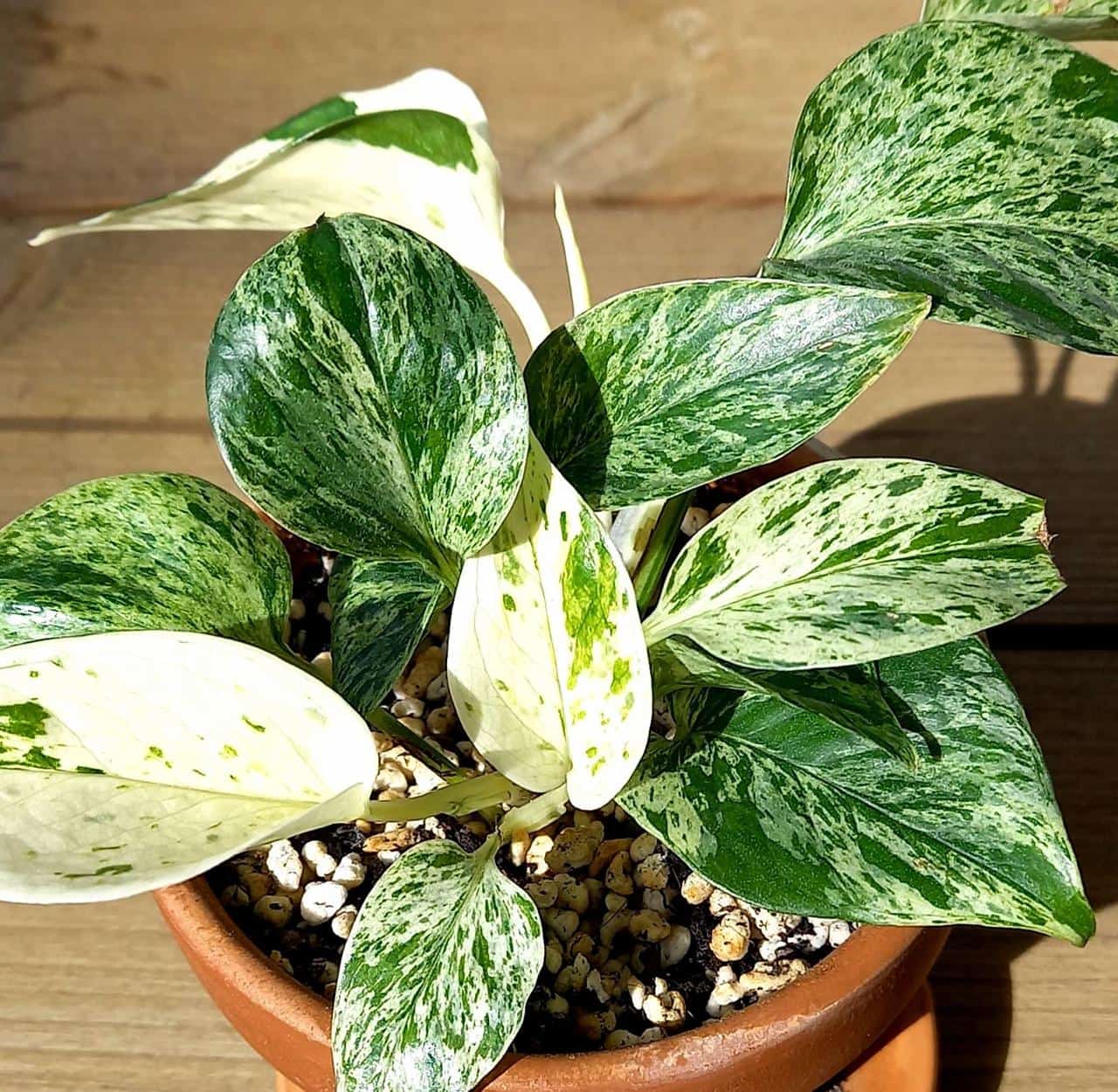
_houseplant_(cropped).png)
On this page
- What you need
- Where to cut pothos for propagation
- Step by step: propagating pothos in water
- Do you need rooting hormone?
- Water vs soil propagation
- Moving pothos cuttings from water to soil
- Making a leggy pothos fuller
- Keeping pothos in water long term
- Troubleshooting
- Propagating pothos in a water bottle
- Common mistakes
- The same method works for other plants
- Safety note
- Sources and further reading
Propagating pothos in water takes four steps: cut a length of vine just below a node, remove the leaf nearest the cut, stand the cutting in a jar of water so the node is submerged, and keep it in bright, indirect light, changing the water weekly. Roots usually appear within one to three weeks, and the cutting is ready to plant in soil after about a month. It's one of the easiest ways to make a pothos fuller or to save a struggling plant.
What you need
- A healthy pothos with at least a few long vines
- Clean, sharp scissors or secateurs (wipe them with rubbing alcohol)
- A clear glass jar, bottle or vase
- Room-temperature tap water, or filtered water if yours is very hard
- A bright spot out of direct sun
Where to cut pothos for propagation
Look along the vine for nodes: small brown bumps where each leaf joins the stem. A node is where new roots and shoots grow. Without one, the cutting can't grow into a new plant.
- Choose a healthy vine with several leaves.
- Cut about 1 cm below a node.
- Make each cutting 2–4 nodes long. Longer cuttings are fine, but you'll have more leaves to support while there are no roots.
- Remove the leaf at the lowest node so the node can sit in water without a rotting leaf.
You can also cut a long vine into several single-node cuttings (one leaf, one node each). They root fine, though they take longer to look like a plant.
Step by step: propagating pothos in water
- Prepare the cuttings as above.
- Fill the jar with water deep enough to cover the bottom node or two, but keep leaves out of the water.
- Put the cuttings in. Several can share a jar.
- Place in bright, indirect light. A spot near an east- or north-facing window is ideal. Avoid hot direct sun, which heats the water and encourages algae.
- Change the water every 5–7 days. Rinse the jar if it's cloudy or slimy.
- Wait. White root nubs appear first, then lengthen.
How long does it take?
| Stage | Typical timing (warm, bright room) |
|---|---|
| Root nubs appear | 1–3 weeks |
| Roots 2–3 cm long | 3–4 weeks |
| Roots 5 cm+, small side roots | 4–6 weeks |
| New leaf from a node | 4–8 weeks |
In a cool room or in winter, expect everything to take longer. A warm spot (about 20–25 °C) speeds it up.
Do you need rooting hormone?
No. Pothos roots very readily on its own. Rooting hormone powders are made for cuttings going into soil or compost and mostly wash off in water. Liquid rooting concentrates can be added to water, but there's little evidence they're needed for pothos. Save your money.
Water vs soil propagation
| Water | Soil | |
|---|---|---|
| Ease | Very easy | Easy |
| See the roots? | Yes | No |
| Risk | Shock when moved to soil | Rot if kept too wet |
| Speed | Fast rooting | Similar, roots stronger in soil |
| Best for | Beginners, displays, saving a rotted plant | Making a full pot quickly |
Water-grown roots are adapted to water. When you move a cutting to soil, it needs a short period to grow soil roots, and it may droop or drop a leaf. Moving cuttings when roots are 3–5 cm long, not 20 cm, makes the transition easier.
Moving pothos cuttings from water to soil
- Pick a small pot. A 10–12 cm pot with drainage is enough for several cuttings.
- Use a light, airy mix. A general mix of 70% potting soil and 30% perlite works well. The soil mix calculator scales it. For a small pot, about 1 litre is plenty: 0.7 L soil and 0.3 L perlite.
- Plant several cuttings together for a fuller look, burying the rooted nodes.
- Keep the soil lightly moist for the first 2–3 weeks, then switch to the normal rule: water when the top 2–5 cm are dry.
- Keep in bright, indirect light.
Once established, care is the same as any pothos. See our pothos care guide.
Making a leggy pothos fuller
Propagation is the classic fix for a pothos with long, bare vines:
- Cut the long vines back to about 10–15 cm from the soil.
- Root the cut pieces in water.
- Plant the rooted cuttings back into the original pot, around the base.
The cut stems usually push new growth from the node below the cut, and the replanted cuttings fill the gaps.
Keeping pothos in water long term
Pothos can live in water for a long time, which is handy on shelves, desks and in offices. Our guide to plants for an office with no windows recommends it for exactly that reason. To keep it healthy:
- Change or top up the water every week or two.
- Add a liquid fertilizer at a quarter of the label dose about once a month, since water has almost no nutrients. With a 5 ml per litre feed, the fertilizer dilution calculator gives 1.25 ml for a litre of water at quarter strength.
- Clean the jar if algae builds up. An opaque or tinted container reduces algae.
- Expect slower growth than in soil.
Troubleshooting
No roots after three weeks
Usually low light, a cold room, or no node under the water. Check each cutting has a node submerged and move it somewhere brighter and warmer.
Cuttings turning yellow in water
A yellowing leaf is often the cutting rationing its energy. Repeated yellowing means stale water, a submerged leaf, or too little light. Our pothos yellow leaves guide covers the details.
Slimy or brown stems
The stem is rotting. Cut above the rotten section, just below a healthy node, rinse the jar and start again with fresh water.
Propagating pothos with no leaves
A node with no leaf can sometimes sprout, but slowly. A leaf without a node can make roots but almost never grows a new vine. For reliable results, use cuttings with at least one node and one leaf.
Propagating pothos in a water bottle
Any clean, clear container works, including a rinsed drinks bottle with the top cut off. A narrow neck holds cuttings upright. A wide vase gives more room for roots. Tall, thin bottles can make roots tangle, which makes moving them to soil harder.
Common mistakes
- Cutting between nodes. A stem with no node under water won't root. Always cut just below one.
- Leaving leaves underwater. Submerged leaves rot and foul the water within days.
- Using a dark spot. Cuttings root on stored energy plus light. A dim shelf can stall them for weeks.
- Never changing the water. Oxygen drops and bacteria build up. Weekly changes keep roots white and firm.
- Waiting too long to pot up. If you want a soil plant, move it once roots are 3–5 cm. Months-old water roots struggle more with the change.
- Planting into a big pot. A small pot dries out faster, which suits young roots.
The same method works for other plants
Heartleaf philodendron, monstera, tradescantia, coleus and many other vining or soft-stemmed plants root in water the same way: cut below a node, keep leaves out of the water, give bright indirect light, and change the water weekly. Monstera needs a node with an aerial root for the best results. Our monstera deliciosa care guide covers it.
Safety note
Pothos sap can irritate skin, and the plant is listed as toxic to cats and dogs by the ASPCA. Wash your hands after taking cuttings and keep jars out of reach of pets, who sometimes drink from them.
Sources and further reading
- Royal Horticultural Society, for general guidance on taking stem cuttings.
- University of Minnesota Extension, on propagating houseplants.
- ASPCA Toxic and Non-Toxic Plants list.
Frequently asked questions
How long does it take to propagate pothos in water?
Roots usually appear within one to three weeks in a warm, bright spot. Most cuttings have roots long enough to plant, around 3 to 5 cm, after about four to six weeks. Cool rooms and low light slow it down.
Where do you cut pothos to propagate?
Cut just below a node, the small brown bump on the stem where a leaf joins and aerial roots form. Each cutting needs at least one node, and ideally two to four nodes with leaves.
Can you propagate pothos without a node or leaves?
A cutting needs a node to grow roots. A leaf with only its stalk and no node may form roots but will not grow a new vine. A bare stem section with a node but no leaf can sometimes sprout, but it is slow and less reliable.
Do I need rooting hormone for pothos in water?
No. Pothos roots very easily in plain water. Rooting hormone powders are designed for soil and mostly wash off in water.
Is it better to propagate pothos in water or soil?
Both work. Water lets you watch roots grow and is very reliable. Soil avoids the adjustment period when cuttings move from water to soil. Many people root in water, then plant once roots reach a few centimetres.