Pothos Care Guide: How to Take Care of a Pothos Plant
How to take care of a pothos plant indoors: light, watering, soil, feeding, propagation, and fixes for yellow leaves and leggy vines.
_houseplant_(cropped).png)
On this page
- Pothos care at a glance
- Pothos varieties
- Light: how much does pothos need?
- How often to water pothos
- Soil and pots
- Feeding
- How to propagate pothos in water
- Making a leggy pothos fuller
- Where to put a pothos indoors
- Growing pothos up a pole
- Cleaning and general upkeep
- Common pothos problems
- Pothos care checklist
- Pothos vs heartleaf philodendron
- Related tools and guides
How to take care of a pothos plant, in short: put it in medium, indirect light, use a free-draining mix in a pot with drainage, and water when the top few centimetres of soil are dry. Feed lightly in spring and summer, and trim long vines to keep it full. Pothos (Epipremnum aureum) is one of the most forgiving houseplants. Most problems come from overwatering or very low light.
Pet note: the ASPCA lists golden pothos as toxic to cats and dogs. Hang it or shelve it out of reach if your pets chew plants.
Pothos care at a glance
| Need | What works |
|---|---|
| Light | Medium, indirect is best. Tolerates low light. Avoid harsh direct sun. |
| Water | When the top 2–5 cm of soil are dry |
| Soil | General potting mix with perlite, or an aroid mix |
| Humidity | Average is fine |
| Feeding | Diluted liquid feed in spring–summer |
| Repotting | When root-bound, 2–3 cm wider |
| Propagation | Very easy from node cuttings in water |
| Pets | Toxic to cats and dogs (ASPCA) |
Pothos varieties
The care is essentially the same across common varieties, but light needs differ a little:
| Variety | Look | Light note |
|---|---|---|
| Golden pothos | Green with yellow streaks | Very tolerant |
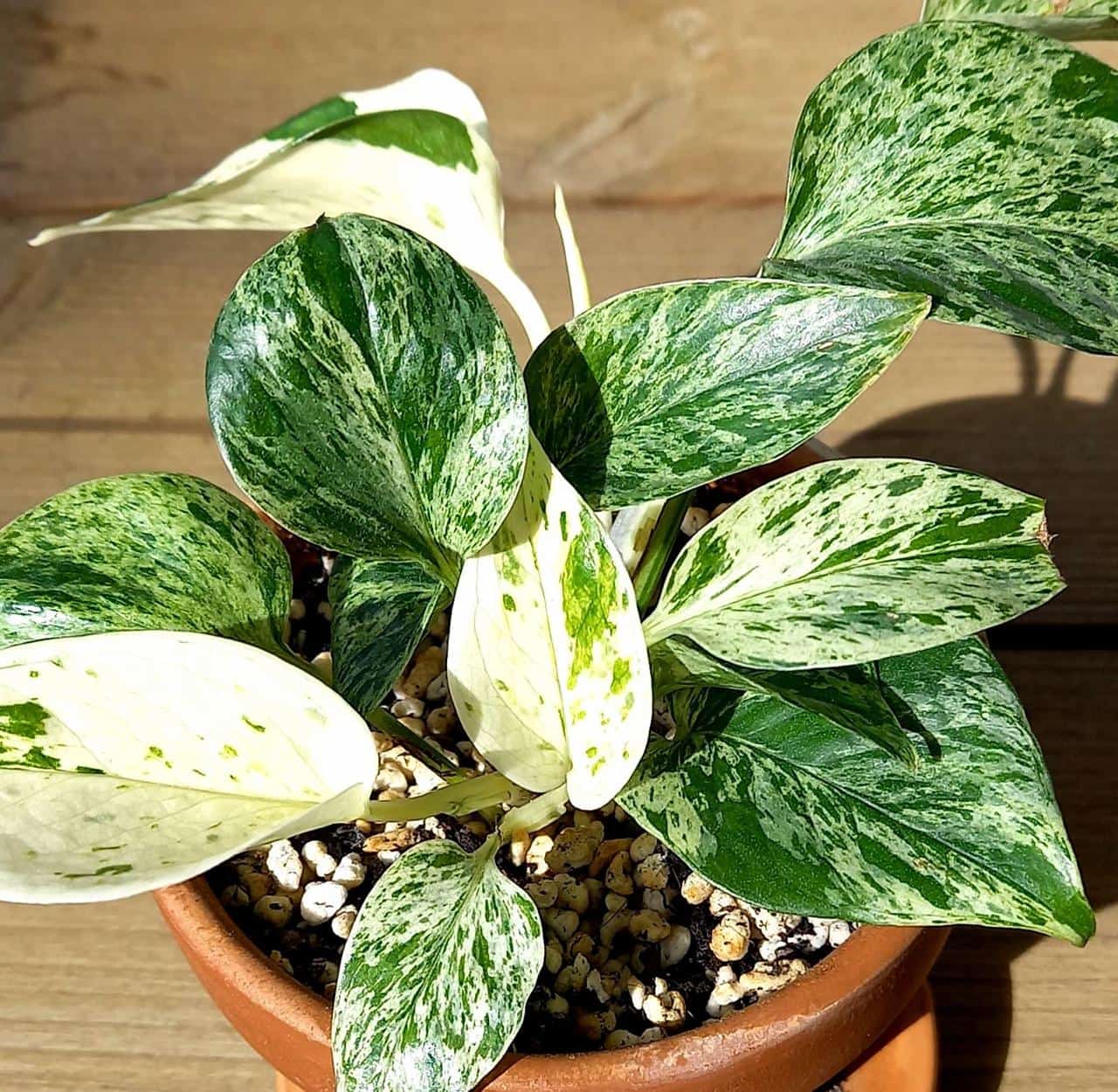
| Marble Queen | Heavy white-cream marbling | Needs more light to keep variegation |
| Neon | Bright chartreuse leaves | Colour fades in low light |
| Jade | Solid green | Most low-light tolerant |
| N'Joy / Pearls and Jade | Crisp white-and-green patches | Slower growing, likes brighter light |
As a rule, the more white or yellow a leaf has, the less chlorophyll it has, and the more light the plant needs to grow well.
Light: how much does pothos need?
Pothos grows best in medium, indirect light, such as a few metres from a bright window or right next to a north-facing one. It's often listed as a low-light plant, and it will survive there, but growth slows and leaves get smaller.
The light meter converter helps here. On the common houseplant scale, around 250 to 1,000 foot-candles (roughly 2,700 to 10,800 lux) is medium light. Below about 250 fc is low light, where pothos survives but grows slowly. If you're choosing between several dim spots, the low-light plant finder compares pothos with other shade-tolerant plants.
How often to water pothos
Water when the top 2 to 5 cm of soil are dry. Pothos also gives a visual cue: when it's thirsty, the leaves go slightly soft and droop a little. Water thoroughly, let it drain, and empty the saucer.
Example routines from the watering schedule builder:
| Setup | Check soil every |
|---|---|
| Pothos, low light, 12 cm plastic pot, growing season | 8 days |
| Pothos, medium light, 15 cm pot, growing season | 7 days |
| Pothos, medium light, 15 cm pot, winter | 11 days |
These are check intervals. Always feel the soil before watering.
Signs you're watering too much
- Yellow leaves, often several at once
- Soil that stays damp for more than a week
- Black or mushy stems at the soil line
- Fungus gnats flying around the pot
Signs you're watering too little
- Leaves droop and feel limp
- Brown, crispy edges
- Soil pulling away from the pot sides
Soil and pots
Pothos isn't fussy about soil, but it hates soggy roots. A good general potting mix with about 30% perlite works well. If you already mix aroid soil for a monstera, pothos is happy in that too. The soil mix calculator scales both recipes.
Always use a pot with a drainage hole. Hanging baskets are popular for pothos. Make sure yours drains, and take it down to water so you can let it drip.
Repot when roots fill the pot or come out of the bottom. Move up only about 2 to 3 cm for small pots. The pot size calculator suggests the next size.
Feeding
During spring and summer, feed with a balanced liquid houseplant fertilizer, diluted as the label directs. Many growers use half strength. The fertilizer dilution calculator works out the millilitres for your watering can. Feed less, or not at all, in winter and in low light.
How to propagate pothos in water
Pothos is one of the easiest plants to propagate. It's a great way to make a sparse plant fuller or to share it with friends.
- Find the nodes. These are the small brown bumps on the vine, where a leaf meets the stem. Roots grow from the nodes.
- Cut a length of vine with at least one or two nodes and a leaf or two, cutting just below a node.
- Remove any leaf that would sit underwater.
- Put the cutting in a jar of water, with the nodes submerged.
- Place it in bright, indirect light and change the water every week or so.
- Wait for roots. They often appear within a few weeks. Once they're a few centimetres long, you can pot the cutting or keep it in water.
To make the mother plant bushier, plant rooted cuttings back into the same pot around the base.
Making a leggy pothos fuller
A pothos with long, bare vines and leaves only at the tips is usually short on light, or has never been pruned.
- Move it to brighter, indirect light.
- Prune long vines just above a node. New growth will often branch from near the cut.
- Root the cuttings and plant them back in the top of the pot.
- Rotate the pot every few weeks.
Where to put a pothos indoors
Because it trails and copes with a range of light, pothos fits places other plants can't. Some ideas, and what to watch for in each:
| Spot | Works well because | Watch out for |
|---|---|---|
| Top of a bookshelf | Vines trail down the front | Less light up high; check soil is drying |
| Hanging basket by a window | Good light, eye-catching | Drips when watered; dries fast in summer |
| Bathroom with a window | Humidity, indirect light | Very dark bathrooms are too dim |
| Office desk | Tolerates fluorescent light | Weekends with heating off; overwatering by colleagues |
| Kitchen windowsill | Bright, easy to remember | Direct afternoon sun can scorch |
If a spot is truly dark, such as a windowless room, pothos will slowly decline without a grow light. A simple LED grow bulb on a timer can keep it going.
Growing pothos up a pole
Trailing is the classic look, but pothos is a climber, like monstera. Trained up a moss or coir pole, pothos often produces noticeably larger leaves over time. To try it:
- Push a pole into the pot at repotting time, so you don't damage established roots.
- Wrap the longest vines around the pole and fix them with soft ties.
- Press the nodes against the pole, because that's where aerial roots form and grip.
- Keep a moss pole lightly damp to encourage roots to grow into it.
It takes patience. Expect several months before the climbing growth looks very different from the trailing growth.
Cleaning and general upkeep
Dust on pothos leaves blocks light and gives pests a place to hide. Every few weeks, wipe both sides of the leaves with a damp cloth, or rinse the plant in a lukewarm shower. Then let it drain fully before putting it back. While you're at it, remove yellow leaves, check under leaves for pests, and rotate the pot so all sides get light.
Common pothos problems
Yellow leaves
Overwatering is the usual cause. Let the soil dry more between waterings, and check that the pot drains. One old leaf yellowing occasionally is normal.
Brown spots
Crispy brown patches suggest underwatering or sun scorch. Soft, dark spots suggest too much water.
Losing variegation
Variegated leaves turning greener usually means the plant needs more light. Move it somewhere brighter, out of direct sun. Growth that has already turned green won't change back, but new leaves can.
Small new leaves
This usually comes from low light or a plant that hasn't been fed in a long time. Indoors, pothos leaves stay much smaller than on plants climbing trees in the wild. Giving vines a pole to climb can encourage larger leaves.
Pests
Mealybugs (white, cottony spots), spider mites and fungus gnats are the usual suspects. Isolate affected plants, wipe the leaves, and let the soil dry more to discourage gnats.
Pothos care checklist
- Medium, indirect light (survives low light)
- Pot with drainage
- Free-draining potting mix
- Water when the top 2–5 cm are dry
- Empty saucers and hanging-basket drip trays
- Feed lightly in spring and summer
- Prune leggy vines and replant cuttings
- Out of reach of pets that chew plants
Pothos vs heartleaf philodendron
People often confuse these two trailing plants. Pothos leaves are thicker and slightly textured, with a groove along the stem where each new leaf emerges. Heartleaf philodendron leaves are thinner, softer and more heart-shaped, and new leaves grow from a thin sheath called a cataphyll. Care is very similar, and both are listed by the ASPCA as toxic to pets.
Related tools and guides
- Monstera care guide: a related aroid with similar needs
- Best low-light houseplants: more plants for dim rooms
- How to water houseplants: the full watering technique
- Printable care card: a pothos card for a plant sitter
Sources: toxicity from the ASPCA Toxic and Non-Toxic Plants list. Light conversions use 1 fc = 10.764 lux. Care advice reflects common houseplant practice and is given as ranges.
Going deeper: propagating pothos in water covers cuttings step by step, and pothos yellow leaves diagnoses every common cause of yellowing. New to houseplants altogether? Read how to care for houseplants.
Frequently asked questions
How often do you water a pothos?
When the top few centimetres of soil are dry, or when the leaves start to look slightly soft. In medium light during the growing season, that's often every 1 to 2 weeks, but check the soil rather than counting days.
Can pothos live in low light?
Pothos tolerates low light better than most houseplants, but it grows more slowly. Variegated types may lose some of their pattern. Medium, indirect light gives the best growth.
Why are my pothos leaves turning yellow?
Most often from overwatering, especially if the soil stays wet. An occasional old leaf yellowing is normal. Yellowing with crispy brown patches can point to underwatering or too much direct sun.
Can pothos grow in water permanently?
Many people keep pothos cuttings in water for a long time. Change the water regularly and add a very dilute liquid fertilizer occasionally, because plain water has few nutrients.
Is pothos toxic to cats?
Yes. The ASPCA lists golden pothos as toxic to cats and dogs because it contains insoluble calcium oxalates.