
Marathon fueling
B12 for Vegan Runners: Why Supplementation Isn't Optional
Unfortified plants do not provide B12. Use cyanocobalamin or reliably fortified foods every day — mileage is not an endurance exception for vegan runners.
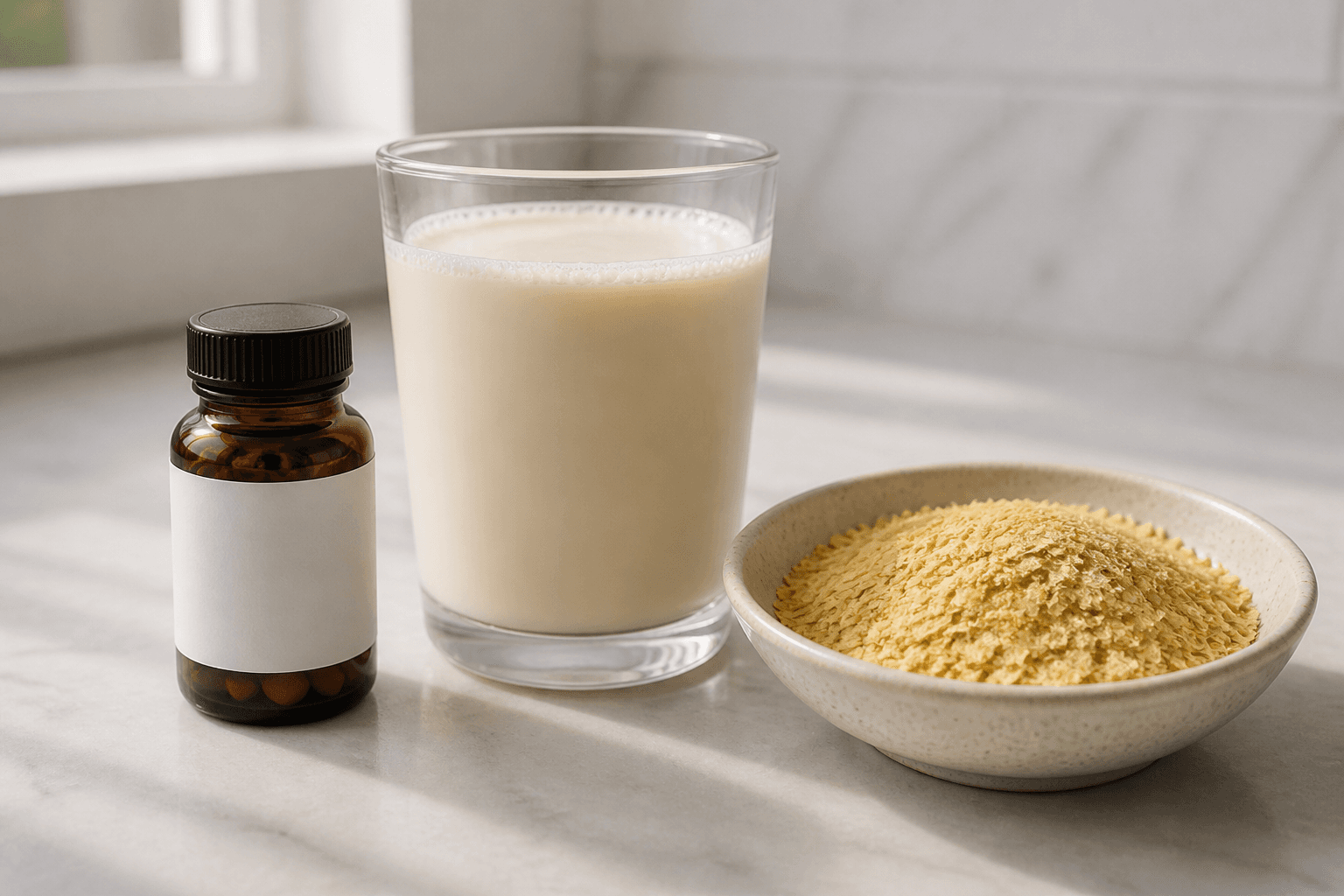
Unfortified plants do not provide vitamin B12. Algae, “soil on vegetables,” and a high-mileage season are not a protocol. Endurance training does not create cobalamin, and a vegan runner who skips a reliable source is taking a neurological risk that food volume will not cancel.
This page is the B12 protocol. Iron absorption and ferritin testing sit in plant-based iron for runners. The combined overview is plant-based iron and B12 for runners.
Why this one is not negotiable
B12 is produced by bacteria, not by plants or animals. Animal products contain it because the animal accumulated bacterial B12; plants have no equivalent route. That is a supply problem with a supply solution, and it is the clearest nutritional consequence of removing animal products from a diet.
The NIH B12 fact sheet sets the adult recommended intake at 2.4 µg per day. Deficiency can be hematologic (anemia, fatigue) and neurologic (paresthesia, gait change, cognitive effects). Prolonged neurologic injury is not always fully reversible. That is a different category of risk from a slightly low iron intake you can rebuild over a training block.
ACSM 2016 still prefers food first for athletes. On a vegan pattern, “food” means fortified food. If you will not reliably eat those foods every day, the tablet is the food-first plan.
Liver stores explain the delay. People go years looking and feeling “fine.” That is not a free pass. It is how deficiency shows up after the marathon you already ran, not before the one you are tapering for.
What to take, and what to ignore
Cyanocobalamin is the boring, well-studied, stable, cheap form. Take it as a daily tablet unless a clinician has given you a different plan (malabsorption, pernicious anemia, and injections are medical, not blog, territory).
Methylcobalamin is marketed as more “natural.” For a healthy vegan runner meeting a basic requirement, it has no required advantage. Sprays, patches, and sublinguals are optional delivery methods, not evidence that a swallowable tablet failed.
Recheck labels on plant milks. Unsweetened, organic, and barista lines are often not fortified. A brand you trusted in January may have a new SKU in August.
Do not use spirulina, chlorella, or nori as B12. Analogues can look like B12 on some tests and still not work in human metabolism.
Fortified foods that genuinely count
A fortified-food strategy works if it is boring and daily. It fails if it is “most days,” plus a two-week work trip on unfortified hotel oat milk.
| Source | Reliable? | Notes |
|---|---|---|
| Fortified soy, oat, or almond milk | Yes, if fortified | Check the panel — organic and barista cartons often skip B12 |
| Fortified breakfast cereal | Yes, if listed | Dose varies widely; bran cereals are a race-week fiber problem |
| Fortified nutritional yeast | Yes, if stated | Many shakers contain none |
| Spirulina, chlorella, nori | No | Analogues, not usable B12 |
| Tempeh, miso, unwashed produce | No | Inconsistent; not a dose |
| Cyanocobalamin tablet | Yes | Travels; does not depend on the hotel breakfast |
| Day type | Weaker B12 plan | Stronger B12 plan |
|---|---|---|
| Training at home | Fortified soy milk “when I remember” | Tablet with breakfast, or a measured carton you finish daily |
| Travel / race hotel | Hope the buffet oat milk is fortified | Tablet in the toiletry bag; soy milk only as extra if labelled |
| Race week | New high-dose B12 “for energy” | Same habit as the rest of the season |
Fortified soy milk is still a useful protein drink in race week (about 7 g protein and 1 g fiber per cup in the plantbaes.net table). It is only a B12 source if the carton says so. Sweetened cartons also add carbohydrate, which you want during a load.
A sample training day that actually covers 2.4 µg without a tablet: 2 cups of a carton that lists 1.2 µg per cup, plus a cereal serving that lists 1.5 µg. That only works if both labels are current and you eat both servings. Miss the cereal because you swapped to cream of rice for a long-run rehearsal, and the day is short. That is why most runners on plantbaes.net protocols keep a tablet even when they also drink fortified milk — the milk is protein and, if labelled, a bonus, not a solo plan.
Race-week cream of rice and bagels are not B12 vehicles. Keep the tablet in the toiletry bag next to the anti-chafe stick. Hotel “oat milk” is usually a barista blend with no cobalamin statement.
Why mileage does not change the answer
Runners sometimes assume a high energy intake covers micronutrients automatically. For B12 that reasoning fails: eating more of a food that contains none of it still yields none.
Higher training loads raise red-cell turnover. That is an argument for paying more attention to a reliable source, not less. It is not an argument that you need a megadose because you ran 90 km this week. Do not stack untested high-dose B12 in taper “for energy.” Energy in race week comes from glycogen and practiced fueling.
Iron deficiency is a separate, common endurance problem (Sim 2019). Treating tiredness as “probably B12” without labs is how people miss low ferritin, low energy availability, or both. If you test, let a clinician choose the panel — serum B12 alone can mislead; MMA and homocysteine are often more informative for functional status.
The overlap with iron is why these pages sit next to each other. Breathlessness on a climb can be either. A greens powder that claims both usually delivers neither in a dose you can count. Sort B12 with a labelled source. Sort iron with meals and, when needed, a ferritin draw. Do not stack untested iron and B12 megadoses in the same taper week because a long run felt flat.
Race week, gels, and powders
Race-week gels will not fix a deficiency. Sort this in the training block, then ignore B12 as a race-morning variable.
Maurten Gel 100 and Neversecond C30 are manufacturer-confirmed vegan carbohydrate. Take them because you gut-trained 25–30 g packets, not because they contain B12.
Garden of Life Sport, Vega Sport Premium Protein, and Orgain Organic Plant-Based Protein are recovery convenience. Some lots list vitamins; many runners still miss days. A powder is a poor sole B12 plan. Tailwind Rebuild is whey. Skratch Recovery contains milk protein. Neither is vegan.
When beans come off the plate for fiber, keep tofu and fortified soy milk so protein does not collapse. That swap is in the carb-loading calculator, not in a new supplement.
Testing is clinical, not DIY from a blog
If you have had no reliable source for a long stretch, if you are pregnant or planning to be, or if neurologic symptoms are present, arrange medical care. This site will not interpret your MMA, will not pick an injection schedule, and will not tell you that a normal serum B12 means you can stop.
People with malabsorption need a different plan than a healthy runner who simply forgot the tablet. That distinction is the whole point of seeing a clinician.
Iron still needs its own conversation when fatigue is the complaint. Do not let a B12 tablet become the only action you take. The iron article covers absorption timing and why ferritin cutoffs do not belong in a recipe blog.
Frequently asked questions
Do vegan runners need a B12 supplement?
Which form of B12 should I take?
Can I get B12 from algae, spirulina, or nutritional yeast?
What are the symptoms of B12 deficiency in runners?
How long does it take to become B12 deficient?
Should I get my B12 levels tested?
Will race-day gels or protein powder cover B12?
Sources
- National Institutes of Health Office of Dietary Supplements — Vitamin B12 fact sheet.
- Thomas, D. T., Erdman, K. A., & Burke, L. M. (2016). ACSM Joint Position Statement: Nutrition and Athletic Performance.
- Sim, M., et al. (2019). Iron considerations for the athlete: a narrative review. European Journal of Applied Physiology.
Educational content only. Carbohydrate, fiber, iron, B12, and hydration needs vary. Consult a sports dietitian or physician for individualized guidance — especially if you have a GI condition, anemia, or a history of underfueling.