
Marathon fueling
Plant-Based Iron and B12 for Runners: What the Research Actually Says
Non-heme iron, hepcidin after hard sessions, and why B12 is not optional on a vegan diet. Training-block habits — not race-week pills or guessed ferritin.
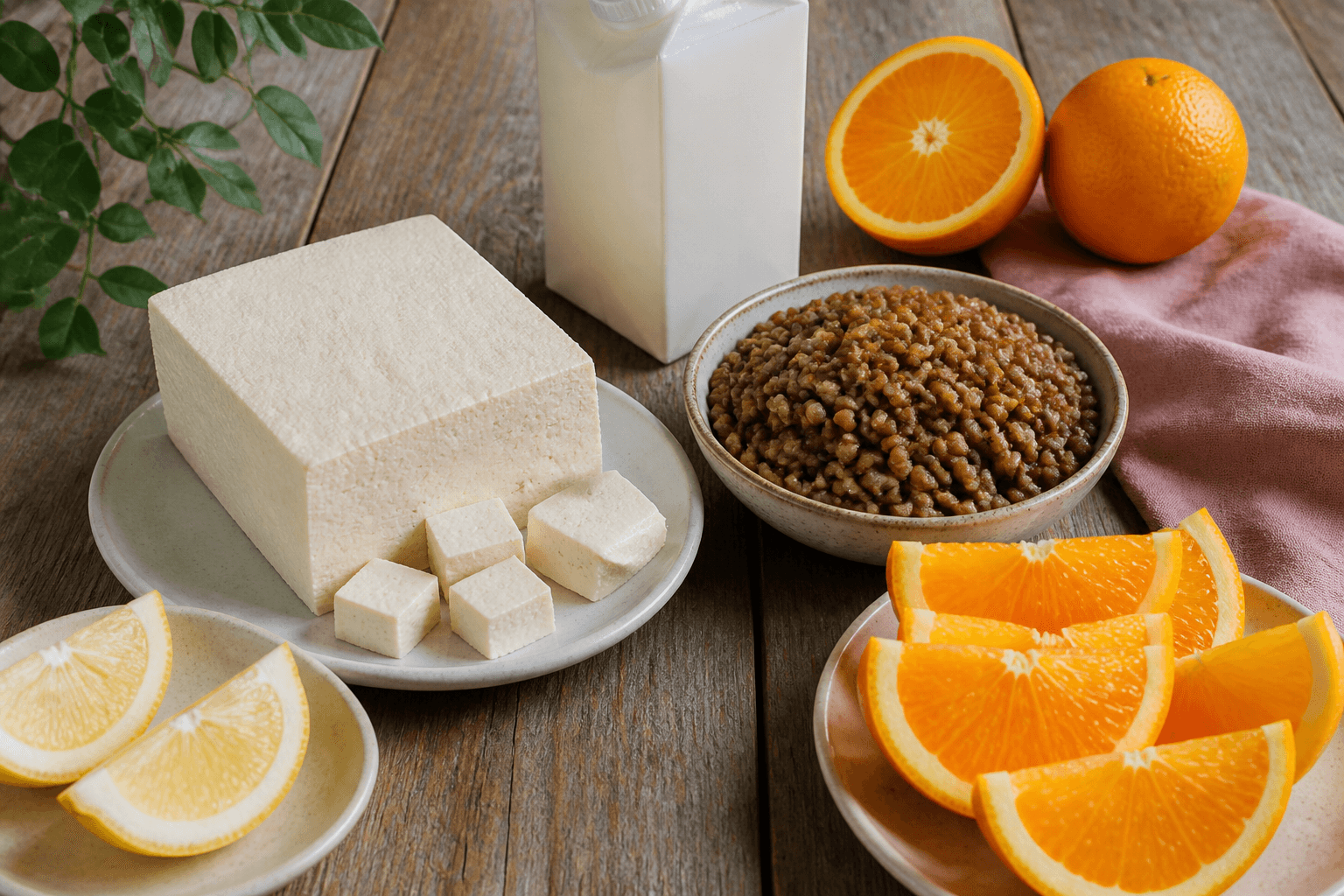
Iron deficiency — with or without anemia — is common in endurance athletes, and a vegan pattern adds a non-heme-only constraint. Vitamin B12 has no reliable unfortified plant source, so a supplement or consistently eaten fortified foods is not optional. Neither nutrient is a race-week project: stores are built over months, and a new iron pill 48 hours before the gun mainly adds nausea.
This page is sports performance education, not a diagnosis pathway. Fatigue, heavy legs, and stalled sessions overlap with under-fuelling, poor sleep, and simply doing too much. Testing belongs with a clinician who understands athletes. The dedicated absorption notes live in plant-based iron for runners; the B12 protocol is in B12 for vegan runners.
Nothing here replaces a sports dietitian or a physician. If you already have a prescribed iron protocol, do not abandon it because a race-week menu parks lentils. Keep the prescription. Change the fiber.
Why iron and B12 belong on the same page
Both sit in oxygen delivery and red-cell turnover. Iron is part of hemoglobin and myoglobin. B12 is required to make healthy red cells and to maintain nerve myelin. A runner who is breathless on climbs can be looking at either, at both, or at neither.
The plant-specific wrinkles are different. Iron is present in legumes, tofu, spinach, seeds, and fortified cereal, but it is non-heme and easy to block. B12 is simply not in unfortified plants. Treating them as one “vegan vitamin” problem leads people to buy a greens powder and skip the blood test.
ACSM 2016 still frames micronutrients inside a food-first athletic diet, with supplements used when intake or status is inadequate. For B12 on a vegan pattern, “food first” means fortified food or a tablet. For iron, it means training-block meals built on purpose, then a lab if symptoms or risk are high.
How endurance running spends iron
Sim and colleagues (2019) review why athletes, especially endurance athletes and women, present with iron deficiency more often than sedentary cohorts. Several small losses stack across a marathon block:
- Gastrointestinal micro-bleeding during hard or prolonged running.
- Foot-strike hemolysis — red cells damaged by repeated impact.
- Sweat and urinary losses, small per session, persistent across high mileage.
- Menstruation, which for many runners is the largest single contributor.
- Hepcidin elevation after hard sessions, which temporarily suppresses absorption for several hours.
That last point changes meal timing. An iron-rich dinner eaten immediately after evening intervals may be absorbed less well than the same plate at lunch. You do not need to obsess over every snack. You do want one clearly iron-focused meal on training days, placed away from the hardest session when you can.
Higher mileage does not create a license to self-prescribe iron. It is a reason to stop guessing from “heavy legs” and get a panel read by someone who will not treat a marathoner like an office worker with a normal-looking number.
Plant iron sources that actually carry weight
Non-heme iron still counts. You just need realistic portions and a vitamin C partner in the same sitting. Approximate USDA-style values:
| Food | Portion | Iron (approx.) | Fiber (plantbaes.net table) | Pair with |
|---|---|---|---|---|
| Cooked lentils | 1 cup | 6.6 mg | ~15 g in a 1.5-cup soup | Tomato, peppers, lemon |
| Firm tofu | 150 g | ~2.7 mg | 1 g | Citrus-dressed vegetables |
| Cooked spinach | 1 cup | 6.4 mg | modest cooked | Lemon, tomato |
| Pumpkin seeds | 30 g | 2.5 mg | adds up fast | Fruit, not a huge handful on race week |
| Fortified breakfast cereal | 1 serving | varies widely | check the box | Orange juice |
Lentils win on milligrams and lose on race-week fiber. A 1.5-cup bowl of lentil soup is 15 g of fiber in the plantbaes.net foods table — the entire working ceiling used on plantbaes.net for the last 36–48 hours before a marathon. That is why iron work happens in the block, and tofu carries a smaller iron dose through taper without blowing the gut.
Fortified cereal can be an easy training-day vehicle if the label actually lists iron. Organic and “simple” lines often do not. Read the panel, do not assume the brand.
What blocks absorption, and what helps
The NIH iron fact sheet is blunt: non-heme iron is sensitive to the rest of the plate. You do not need a perfect meal. You need to stop stacking every inhibitor onto the one plate you were counting on.
| Habit | Typical plate | Better training-week version |
|---|---|---|
| Coffee with breakfast iron | Lentils or fortified cereal plus a large coffee in the same 20 minutes | Cereal or tofu scramble with orange juice; coffee 60+ minutes later |
| Tea after a bean dinner | Chili, then black tea at the table | Chili with peppers and tomato; tea an hour later |
| Calcium tablet with lunch | Tofu bowl plus a calcium supplement | Move the tablet to a snack that is not your iron meal |
| Iron dinner after intervals | Big lentil pot at 8 p.m. after a hard session | Iron-focused lunch with vitamin C; post-run meal can be rice, tofu, and carbs |
Vitamin C is the enhancer worth building a habit around. A glass of pulp-free orange juice, peppers in a stir-fry, or tomato on lentils is free and large. Phytates fall when legumes are soaked, fermented, or processed; tofu and tempeh usually beat whole soybeans for that reason.
Coffee on race morning stays if it is your long-run ritual. That cup is for caffeine and gastric timing, not for ferritin. Details on the iron-only timing questions are in the iron article.
Ferritin is a lab result, not a smoothie claim
Serum ferritin is a storage marker. Hemoglobin tells you whether anemia is already present. Interpretation is clinical. Inflammation, infection, and a heavy training week can lift ferritin because it is an acute-phase reactant, which is why a number drawn the morning after a long run can look more comfortable than stores really are.
This site will not publish a “runners should be above X µg/L” rule. Cutoffs used in research and clinics vary, and applying one from a blog is how people either ignore a real problem or start high-dose iron they do not need. Iron overload is not theoretical. GI side effects from supplements are common.
Ask for ferritin and hemoglobin. Mention that you are an endurance athlete on a plant-based diet. If neurological symptoms are in the picture — tingling, numbness, balance changes — say that too, because the differential includes B12.
A green smoothie has not solved this. Neither has a week of spinach. If you need supplementation, that decision follows a test.
B12 has no vegan-food exception
NIH is unambiguous: vitamin B12 is not produced by plants. Animals accumulate it from bacterial sources. Unfortified plant foods do not provide a reliable dose. Algae and spirulina often contain analogues that do not function as B12 in humans and can confuse assays.
The adult recommended intake is 2.4 µg per day. You can meet that with a daily cyanocobalamin tablet, with several servings of foods that state a B12 dose, or with a combination you actually repeat when you travel. Methylcobalamin is sold as premium; it is not required for a standard supplement plan.
| Source | Counts as B12? | Practical note |
|---|---|---|
| Fortified soy, oat, or almond milk | Yes, if the carton lists B12 | Organic and barista lines are often unfortified — check every brand change |
| Fortified breakfast cereal | Yes, if listed | Dose varies; one serving is not a lifetime policy |
| Fortified nutritional yeast | Yes, if stated | Many shakers contain none |
| Spirulina, chlorella, nori | No | Analogues, not a protocol |
| Tempeh, miso, unwashed vegetables | No | Inconsistent bacterial contamination is not a dosing strategy |
| Cyanocobalamin tablet | Yes | Boring, stable, cheap — the default for most vegan runners |
Liver stores can last years, which is why some people eat vegan for a long time before labs look odd. That delay is an argument for starting a reliable source early, not for waiting until you feel “fine.” Neurological injury from prolonged deficiency is not always fully reversible. That is a different category of risk from a slightly low omega-3 intake.
Full mechanics and testing caveats: B12 for vegan runners.
Fatigue is not a diagnosis
Heavy legs, a high heart rate on easy runs, breathlessness on grades, and a sudden drop in session quality are consistent with low iron. They are also consistent with low energy availability, a jump in mileage, heat, poor sleep, thyroid disease, and a dozen other training problems.
Self-prescribing iron because a block feels hard is a common shortcut. It can mask a different cause, and it can harm people who are not deficient. The overlap is the reason for a blood test rather than a cart full of “athlete” capsules.
B12 deficiency can look hematologic, neurologic, or both. Tingling, numbness, gait changes, and cognitive fog are not “just marathon training.” Those need prompt medical assessment, not another easy week and a hope.
Protein intake still matters alongside these labs. A rice-and-vegetable pattern that undershoots daily protein will make you tired without ever touching ferritin.
Race week will not fix iron or B12
Glycogen supercompensation is a 36–48 hour carbohydrate job. Ferritin is not. Starting ferrous sulfate on Thursday because you “feel flat” is how runners arrive at the start line nauseated and constipated.
The last 48 hours also park the highest-iron plant foods for fiber reasons. That is expected. You are not reversing months of intake in a weekend, and you should not try.
| Training-block plate | Why it is there | Race-week swap | What you keep |
|---|---|---|---|
| Lentil soup, whole-wheat toast, peppers | Iron, protein, vitamin C | White rice, 150 g firm tofu, soy sauce, small marinara | Some protein and a little iron, far less fiber |
| Fortified cereal, soy milk, orange juice | Iron and B12 if the labels say so | White bagel, maple, banana; keep the fortified soy milk if it sits well | B12 habit if the carton is fortified; drop bran |
| Chili with spinach | Iron and volume | White pasta, tofu, peeled zucchini | Carbohydrate for the load |
A 150 g block of firm tofu is about 16 g of protein and 1 g of fiber. That is the race-week protein move. Beans return with the post-marathon recovery meal.
Scale the carbohydrate around those swaps with the same food table as the rest of this site.
A training-block plan that does not wreck race week later
You want habits you can drop for 48 hours without panic.
Iron, most training days. One meal built on legumes or tofu plus a vitamin C food. Coffee and tea off to the side. If you run hard in the evening, put that meal at lunch. Include fortified cereal on some mornings if the label carries iron.
B12, every day. Tablet with breakfast, or a fortified soy milk you do not skip. Recheck the carton when you switch brands. Hotel breakfasts are not a source unless you brought the tablet.
Protein. Hitting 1.2–2.0 g/kg from tofu, soy milk, tempeh, and legumes supports repair. Plant proteins are often lower in leucine per gram (van Vliet, Burd, and van Loon, 2015); that is a serving-size issue, not an iron issue.
Do not. Treat Garden of Life Sport, Vega Sport Premium Protein, or Orgain as ferritin therapy. They can help you hit protein when appetite is low. They are not a substitute for a B12 source unless the label states B12 and you actually use that serving daily. They are not a reason to skip a blood test.
Rehearse the low-fiber swaps on a long-run weekend long before taper, using the vegan carb-loading protocol. The iron-rich chili can wait until Monday after the race.
Powders, gels, and the expo table
Race day is carbohydrate. Maurten Gel 100 (25 g carbohydrate) and Neversecond C30 (30 g) are manufacturer-confirmed vegan packets many runners already gut-train. They will not move ferritin or B12.
Recovery canisters are a separate trap. Tailwind Rebuild is whey. Skratch Recovery contains milk protein. Both sit beside manufacturer-confirmed vegan hydration from the same brands. Grabbing them because you felt depleted is how a careful vegan runner consumes dairy, and it still is not an iron protocol.
If you want a plant powder in the bag for the finish, use a product with an explicit status — Garden of Life Sport Organic Plant-Based Protein currently carries a Certified Vegan trademark on lots we have checked; Vega Sport Premium Protein and Orgain Organic Plant-Based Protein are manufacturer-confirmed. Reconfirm the lot. Mix it into a carbohydrate drink you already trust, not into a dairy recovery mix.
Frequently asked questions
Do vegan runners need more iron than omnivores?
What blocks iron absorption on a plant-based diet?
Can vegan runners get enough B12 without supplements?
Should I take an iron supplement as a runner?
What ferritin level should runners aim for?
Does race week matter for iron and B12?
Which plant foods are highest in iron for runners?
Will gels or recovery drinks fix low iron or B12?
Sources
- Thomas, D. T., Erdman, K. A., & Burke, L. M. (2016). ACSM Joint Position Statement: Nutrition and Athletic Performance.
- Sim, M., et al. (2019). Iron considerations for the athlete: a narrative review. European Journal of Applied Physiology.
- National Institutes of Health Office of Dietary Supplements — Vitamin B12 fact sheet.
- National Institutes of Health Office of Dietary Supplements — Iron fact sheet.
- van Vliet, S., Burd, N. A., & van Loon, L. J. C. (2015). The skeletal muscle anabolic response to plant- versus animal-based protein. Journal of Nutrition.
Educational content only. Carbohydrate, fiber, iron, B12, and hydration needs vary. Consult a sports dietitian or physician for individualized guidance — especially if you have a GI condition, anemia, or a history of underfueling.