
Marathon fueling
Plant-Based Iron for Runners: Absorption, Timing, and Testing
Non-heme iron, tea and coffee inhibitors, hepcidin after hard runs, and why ferritin is a lab result — not a smoothie, a seed mix, or a race-week pill.
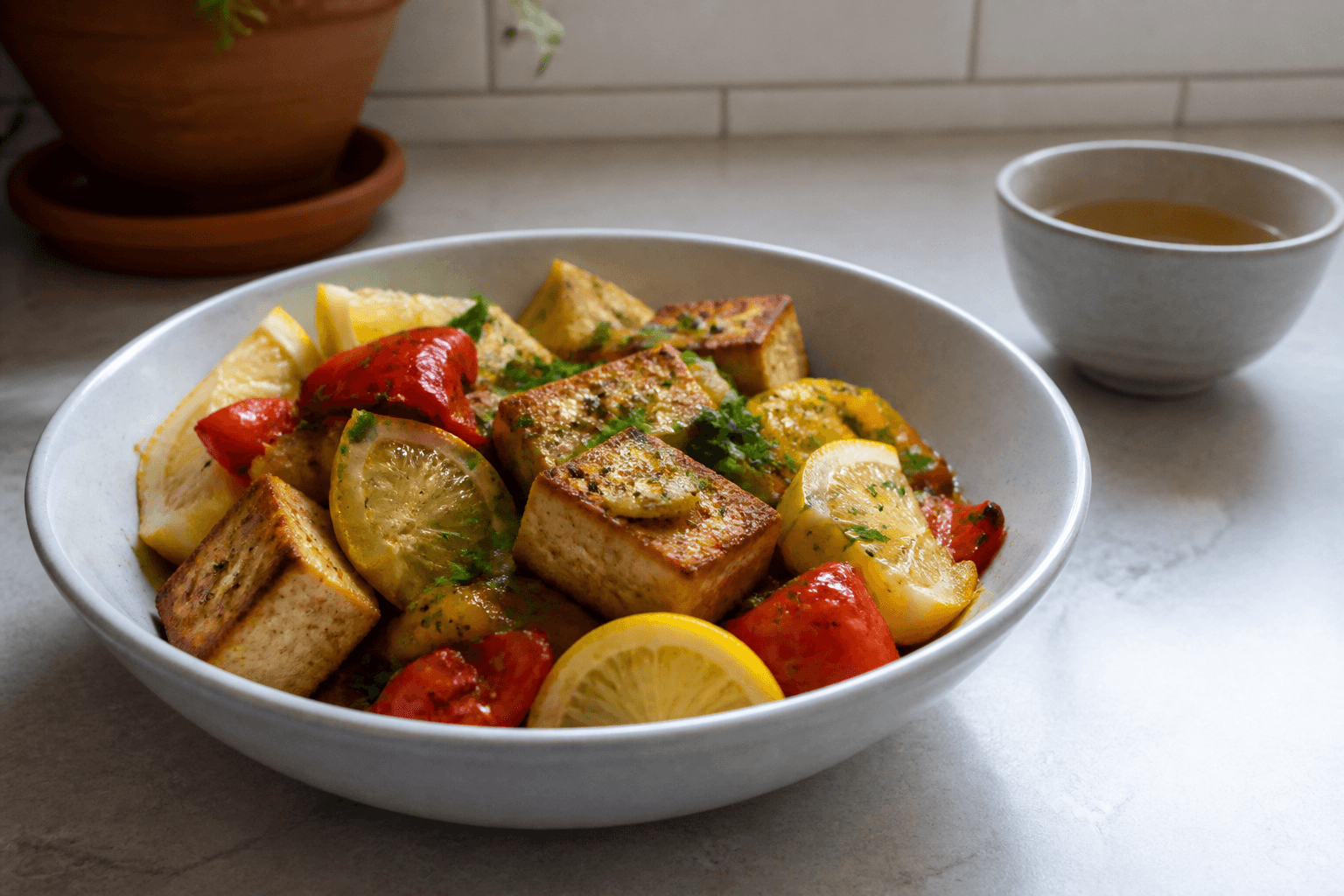
Runners lose iron through gut micro-bleeding, foot-strike hemolysis, sweat, and — for many — menstruation. Plant-based runners only eat non-heme iron, which is more sensitive to inhibitors (phytates, tea and coffee polyphenols, calcium) and to enhancers (ascorbic acid). Race week will not rebuild stores; training-block meals and, when needed, a lab will.
This is the absorption and testing page. The overview that sits next to B12 is plant-based iron and B12 for runners. B12 remains a separate, non-optional supply problem on a vegan diet — see B12 for vegan runners.
Why running raises the iron bill
Sim et al. (2019) summarise how common iron deficiency is in athlete cohorts, especially women and endurance athletes. The losses are small individually and persistent collectively.
Hard or long running can cause gastrointestinal micro-bleeding. Repeated foot strike damages red cells. Sweat carries a little iron out of every session. Menstrual losses dwarf those for many runners. None of that is a moral failing of a plant-based diet. It is a reason the combination deserves attention.
Hepcidin, the hormone that shuts iron absorption down, rises for several hours after strenuous exercise. An iron-focused dinner immediately after evening intervals is poorly timed if you have a choice. Lunch with vitamin C, then a carbohydrate-forward recovery meal after the session, is the more useful pattern.
ACSM 2016 still treats iron as a nutrient to monitor in at-risk athletes, not as a default supplement. At-risk includes heavy menstrual bleeding, low energy availability, and a diet with little bioavailable iron — which a vegan runner can absolutely still eat well, if the meals are built on purpose.
Inhibitors and enhancers, in order of effect
The NIH iron fact sheet is the practical list. Non-heme iron absorption can change several-fold with the rest of the plate.
| Factor | Direction | Practical handling |
|---|---|---|
| Vitamin C (ascorbic acid) | Strong increase | Citrus, peppers, tomato, or juice at the same meal |
| Tea and coffee polyphenols | Strong decrease | Keep 60+ minutes away from iron-focused meals |
| Phytates in grains and legumes | Moderate decrease | Soak, sprout, or ferment; tofu and tempeh fare better |
| Calcium | Moderate decrease | Separate calcium supplements from the iron meal |
| Hepcidin after hard training | Temporary decrease | Favour iron-focused meals earlier in the day |
Vitamin C is the habit worth installing because it is large, cheap, and easy. A glass of orange juice with lentils does more than most capsule decisions. You do not need to add juice to every snack. You need it on the meal you designated as iron-focused.
Coffee can stay in the day. Move it. A mocha with cacao nibs and oat milk is a different drink from black coffee; the nibs and some plant milks add polyphenols and fiber you do not want stacked on an iron breakfast.
Timing that is actually useful
Trying to optimise every mouthful makes the diet miserable and does not move ferritin faster. One clearly iron-focused meal per training day is enough structure for most runners who are eating well.
Training days. Tofu or legumes plus citrus, peppers, or tomato. Coffee 60+ minutes away when you are rebuilding stores. If the quality session is at 6 p.m., put the iron meal at midday and recover with rice, tofu, and carbohydrate after.
Easy or rest days. Same meal still helps. Hepcidin is quieter, which is a small bonus, not a reason to binge seeds.
Race week. Do not restructure the diet around milligrams of iron. You already parked beans for fiber. The working ceiling on plantbaes.net is about 15 g of fiber per day for the last 36–48 hours; a 1.5-cup lentil soup spends that entire number. Keep fortified soy milk if it is part of breakfast and sits well. Do not add a new ferrous tablet on Thursday. Carbohydrate still has to hit 8–12 g/kg from rice, bagels, juice, and tofu — that is the carb-loading protocol, not an iron protocol.
| Setting | Weaker version | Better version |
|---|---|---|
| Weekday breakfast | Fortified cereal, then a large coffee in the same bowl sitting | Cereal with fortified soy milk and orange juice; coffee on the commute |
| Post-intervals dinner | Chili as the “iron recovery” meal at 8:30 p.m. | Iron lunch with peppers; post-run rice, 150 g tofu, maple or banana |
| Friday before the marathon | Double lentils “to top up” | White rice, tofu, soy sauce — iron work already happened |
A 150 g serving of firm tofu is 16 g of protein and 1 g of fiber in the plantbaes.net table. It is not the richest iron source on the list. It is the one that survives a 15 g fiber ceiling.
Plant sources, with the fiber cost attached
Milligrams without residue context are how vegan marathoners wreck taper.
| Food | Portion | Iron (approx.) | Race-week fit |
|---|---|---|---|
| Cooked lentils | 1 cup | 6.6 mg | No — soup at 1.5 cups is ~15 g fiber |
| Firm tofu | 150 g | ~2.7 mg | Yes — 1 g fiber |
| Cooked spinach | 1 cup | 6.4 mg | Training only if you tolerate it; skip large piles in the last 48 hours |
| Pumpkin seeds | 30 g | 2.5 mg | Training snack; not a carb-load food |
| Fortified breakfast cereal | 1 labeled serving | check the box | Only if low-bran and already practised; many are high-fiber |
The NIH notes that vegetarian eating patterns are often planned at about 1.8 times the iron RDA because of lower bioavailability. That is a planning factor for food intake, not a prescription for 1.8 times a supplement dose, and it is not a ferritin target.
When lentils leave the menu for 48 hours, carbohydrate still has to rise. That is a rice-and-bagel problem, not a spinach problem.
Testing — and what this site will not tell you
Ask for ferritin and hemoglobin. Interpretation belongs with a clinician who will not treat “low-normal ferritin in a marathoner” as automatically irrelevant, and who will not treat a social-media cutoff as a diagnosis. If you menstruate heavily, train at altitude, or have been in low energy availability, say so in the appointment — those are the contexts Sim’s review flags as higher risk, and they change how a “normal” lab is read.
Two points worth raising in that appointment:
Ferritin is an acute-phase reactant. A draw sitting on top of a hard block, illness, or injury can overstate stores.
Symptoms plus a low-normal result are a recognised sports-medicine discussion. They are still not a blog’s job to call.
Do not start high-dose iron without that conversation. Do not assume a garden smoothie closed the gap. Do not ignore tingling, numbness, or balance problems — those point toward B12 as well as other neurological causes and need prompt assessment.
What not to do, including at the expo
- Start high-dose supplementation without a test.
- Stack tea or coffee on the iron meal you were proud of.
- Treat race week as the time to address iron status.
- Grab Tailwind Rebuild (whey) or Skratch Recovery (milk protein) because the logo matches the hydration you already use. Neither is vegan, and neither is iron therapy.
- Expect Maurten Gel 100 or Neversecond C30 to supply iron. They are race carbohydrate. Use them as you trained, for grams per hour.
Garden of Life Sport, Vega Sport Premium Protein, and Orgain plant protein can help you hit daily protein when chewing is unappealing. They are not a ferritin protocol unless a clinician has already put you on a plan. Check vegan status per SKU on the dairy-free recovery catalog.
Frequently asked questions
How can vegan runners absorb more iron?
Does coffee block iron absorption?
What are the best plant sources of iron for runners?
How do I know if I have low iron?
Should runners take iron supplements?
Does soaking or cooking legumes improve iron absorption?
Should I eat extra iron in race week?
Sources
- Thomas, D. T., Erdman, K. A., & Burke, L. M. (2016). ACSM Joint Position Statement: Nutrition and Athletic Performance.
- Sim, M., et al. (2019). Iron considerations for the athlete: a narrative review. European Journal of Applied Physiology.
- National Institutes of Health Office of Dietary Supplements — Iron fact sheet.
- National Institutes of Health Office of Dietary Supplements — Vitamin B12 fact sheet.
Educational content only. Carbohydrate, fiber, iron, B12, and hydration needs vary. Consult a sports dietitian or physician for individualized guidance — especially if you have a GI condition, anemia, or a history of underfueling.