
Product guides
Dairy-Free Recovery Protein for Runners: What Actually Works
Post-run protein at ~0.3 g/kg. Garden of Life Sport may be Certified Vegan; Vega and Orgain manufacturer-confirmed. Rebuild and Skratch Recovery are dairy.
After a long run, aim for about 0.3 g of protein per kilogram in the recovery meal, with enough leucine to support repair — plant powders can cover that if the serving is larger or soy-forward, not if you copy a 20 g whey scoop. Garden of Life Sport Organic Plant-Based Protein has carried a Certified Vegan trademark (reconfirm the lot); Vega Sport Premium Protein and Orgain Organic Plant-Based Protein are manufacturer-confirmed. Tailwind Rebuild and Skratch Recovery contain dairy and are not vegan.
The race-fuel planner is the wrong tool for this job. Use the protein filter on the catalog at plantbaes.net and a meal you can actually eat.
What recovery protein is supposed to do
ACSM 2016 still frames endurance recovery as carbohydrate first, protein alongside it. Glycogen is the large deficit after a marathon. Protein supports repair of contractile and mitochondrial proteins. A protein-only shake after 42 km addresses the smaller of the two holes.
The commonly cited per-meal figure is about 0.3 g/kg — roughly 21 g for a 70 kg runner. van Vliet, Burd and van Loon (2015) and Gorissen and colleagues (2018) are why plant athletes often add a bit more: many plant isolates are lower in leucine per gram and slightly less digestible than whey. A serving around a third larger, or a soy-forward source, closes most of that gap. It does not justify doubling the target or buying branched-chain amino acids as a separate product.
Daily intake still matters more than any single scoop. Endurance ranges of about 1.2–2.0 g/kg/day are the background; the recovery meal is one serving inside that day. Distribution across meals matters more on a plant diet because per-serving leucine is lower. Details: plant-based protein for runners and leucine thresholds.
Status on the canisters runners actually buy
Statuses follow the methodology. Certified Vegan is a third-party trademark. Manufacturer-confirmed is brand language. Ingredient-list verified is a panel read. Not vegan means a known animal ingredient. Last verified August 2026.
| Product | Status | Carbs / serving | Note |
|---|---|---|---|
| Garden of Life Sport Organic Plant-Based Protein | Certified Vegan (Vegan Action — reconfirm the lot) | 7 g | The rare catalog row allowed to use the trademark |
| Vega Sport Premium Protein | Manufacturer-confirmed | 6 g | Pea/pumpkin/alfalfa blend; not auto-promoted to Certified Vegan |
| Orgain Organic Plant-Based Protein | Manufacturer-confirmed | 15 g | Some flavours carry more carbohydrate from added sugars |
| Tailwind Rebuild | Not vegan | 17 g | Whey |
| Skratch Recovery Sport Drink Mix | Not vegan | 37 g | Milk protein; hydration from Skratch is a different SKU |
This table does not rank the three plant powders against each other on “effectiveness.” Comparable protein and leucine at a matched serving are, for recovery purposes, interchangeable. The meaningful distinction is between products that are plant-based and products that are quietly dairy.
Garden of Life Sport is the only row here that may use the Certified Vegan mark. Reconfirm the logo on the lot you hold. Formulations and certifications change. Vega and Orgain stay manufacturer-confirmed even though both are plant-protein brands. A plant-based company is not an audit.
Honey is not the usual problem on this shelf. Gelatin is not either. Whey and milk protein are. If a canister says Recovery and shares a running-brand logo, read the allergen line before you scoop.
The expo trap: same logo, dairy inside
Tailwind Endurance Fuel is manufacturer-confirmed vegan. Skratch Sport Hydration, Super High-Carb, and Energy Chews are manufacturer-confirmed vegan. Both brands also sell a recovery mix containing dairy, in the same colours, usually on the same table.
A runner who has decided “Tailwind is vegan” or “Skratch is fine” is exactly the runner who picks up Rebuild or Recovery. That is a labelling and layout problem, not a knowledge test you fail because you were tired.
Aid-station chocolate milk is the food version of the same trap: a studied carbohydrate–protein vehicle, and usually dairy. Finish-line cartons are not a status check.
Honey Stinger belongs on the gel table, not in this canister, but it is the other expo default that is not vegan. Brand-level gel answers: Maurten, GU, and Skratch.
Leucine, serving size, and plant powders
Whey isolate is often around 10–11% leucine by protein weight. Soy and many pea isolates sit nearer 8%. The practical translation is not “plant protein does not work.” It is “the scoop on the tub may be sized for a whey comparison you are not making.”
If a research heuristic is about 2–3 g of leucine per meal in mixed populations, a plant athlete may need roughly a third more protein, or a soy-forward blend, to land in the same neighbourhood. Worked food examples that clear that bar without powder: about 250 g firm tofu, or 750 ml fortified soy milk, or 200 g tofu plus rice in a training week. Race week, prefer tofu and soy milk over lentils so fiber stays in budget.
A pea-only isolate is low in methionine; a rice-only isolate is low in lysine. Blends, or soy on its own, avoid that hole. Vega’s listed blend is pea, pumpkin, and alfalfa. That is a formulation choice, not a Certified Vegan upgrade.
Isolated BCAAs without a complete protein supply a trigger without much building material. Spend the money on food or a complete powder with a status you can file.
Carbohydrate still does most of the recovery work
Ivy and colleagues (2002) are one reason carbohydrate–protein combinations show up in recovery literature. After a marathon, the glycogen problem is larger than the protein problem. A scoop of plant powder in water is a supplement. A scoop in a carbohydrate drink, or tofu on rice with maple and banana, is a meal.
| Option | Carbs | Protein | Best when |
|---|---|---|---|
| Rice, tofu, banana, maple | High | ~20 g | You can face food |
| Soy milk, banana, maple blended | Moderate | ~16 g | Appetite is suppressed |
| Plant powder in a carb drink mix | High | ~20–25 g | Travelling or post-race chaos |
| Plant powder in water | Minimal | ~20–25 g | A supplement to a meal, not a meal |
| Tailwind Rebuild / Skratch Recovery | Moderate | Dairy protein | Not for a vegan finish-line bag |
Orgain’s higher carbohydrate (about 15 g in the catalog row) can be useful if the rest of the meal is light, or redundant if you already have rice and maple. Read the flavour. Some “organic” plant proteins are mostly sugar with a modest protein dose.
Mix powder only into a drink mix you already trust and whose vegan status you have checked — Maurten Drink Mix 160 or Skratch Sport Hydration, for example, both manufacturer-confirmed. Do not invent a “rebuild” by scooping whey because the packet was free.
How to read a plant protein label
- Protein per serving, not per 100 g. Scoop sizes vary. A 30 g scoop at 20 g protein is not the same product as a 40 g scoop at 15 g protein.
- A published leucine figure, if they have one. Brands that disclose amino acids tend to have designed around them. Silence is not a hidden 3 g of leucine.
- Blend or soy. Pea-only and rice-only each miss an essential amino acid. Soy is already reasonably complete.
- Added carbohydrate. Decide whether you want a recovery mix (carbs plus protein) or an isolate to add to food.
- The actual status claim. Certified Vegan with a body you can name. Manufacturer “vegan” language. Or neither. Do not treat a leaf icon as an audit.
- Allergen line. Milk, whey, casein, honey, gelatin. If any of those appear, the row is not vegan no matter what the front of the tub says.
- Lot and date. Garden of Life Sport’s trademark is the example: reconfirm this bag, not last year’s screenshot.
Flavour-specific panels matter. A chocolate version with more sugar, or a “collagen blend” that wandered into a plant brand’s adjacent SKU, is a different product. This catalog does not invent certifications for sibling tubs.
Food first, powder when chewing fails
You do not need powder after a marathon. You need carbohydrate, some protein, fluid, and sodium, in a form you can get down.
If you can chew: white rice or a bagel, banana, maple syrup, tofu or sweetened fortified soy milk, salt as tolerated. A workable plate is in the 30-minute vegan post-marathon recovery meal.
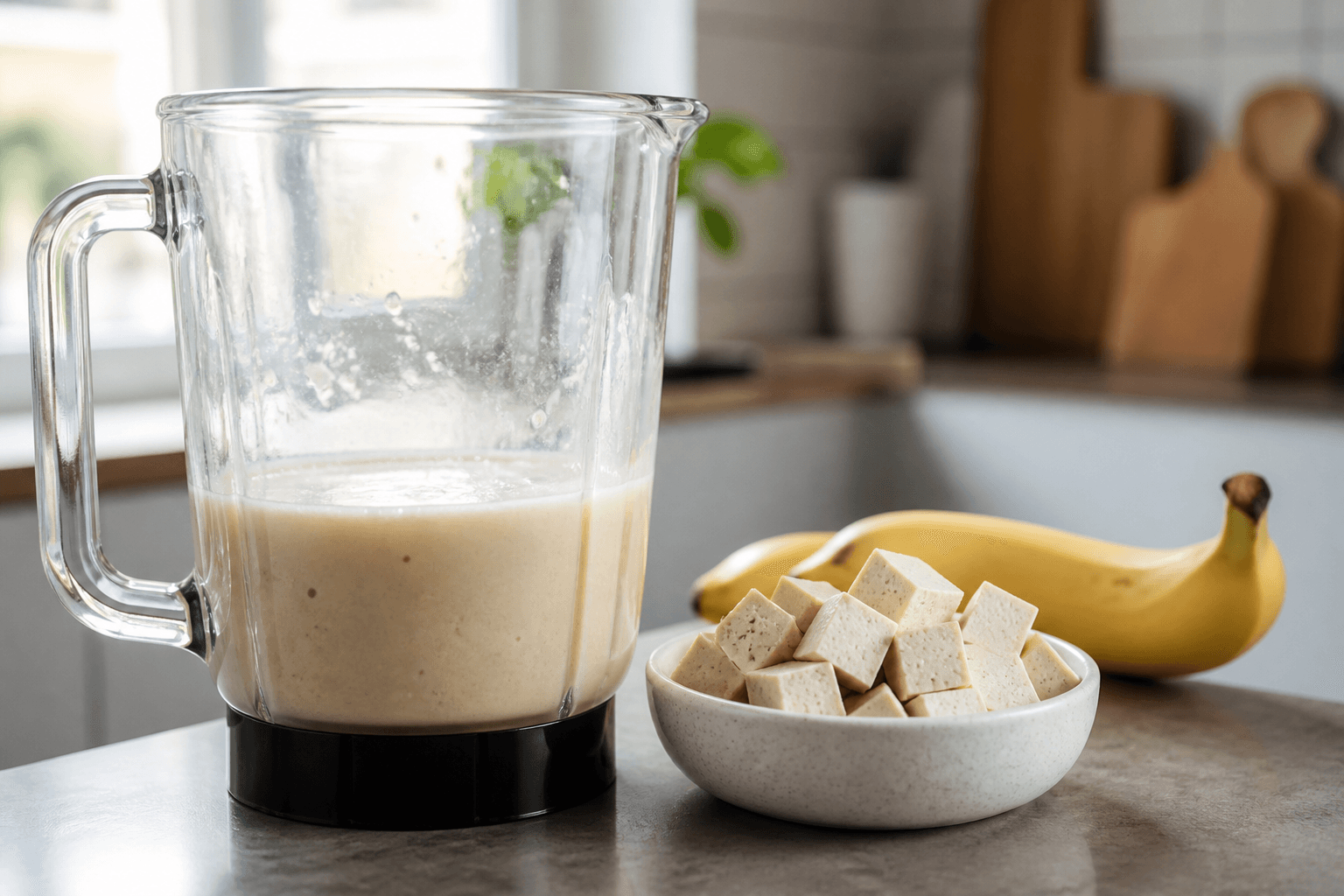
If you cannot chew: blend fortified sweetened soy milk with banana and maple, or mix a status-checked plant powder into a carbohydrate drink you already use. Nausea after a marathon is common. Liquid empties faster than a dry scoop.
Pack it the night before. Race villages are unreliable. The vegan option is frequently a banana and a whey carton. A bagel, a soy-milk carton, a banana, and a known powder in a bag you can reach at the finish removes the entire expo problem.
Then eat a full meal a few hours later. Fiber can come back. Beans can come back. The race-week fiber ceiling exists only to manage the gut during the race.
Frequently asked questions
How much protein should runners eat after a long run?
Is plant protein powder as good as whey for recovery?
Which recovery drink mixes are not vegan?
Do I need protein powder after a marathon?
What should I look for on a plant protein label?
Should I take protein immediately after finishing?
Is Garden of Life Sport protein Certified Vegan?
Can I mix plant protein into a carb drink after a race?
Sources
- Thomas, D. T., Erdman, K. A., & Burke, L. M. (2016). ACSM Joint Position Statement: Nutrition and Athletic Performance.
- van Vliet, S., Burd, N. A., & van Loon, L. J. C. (2015). The skeletal muscle anabolic response to plant- versus animal-based protein. Journal of Nutrition.
- Gorissen, S. H. M., et al. (2018). Protein content and amino acid composition of commercially available plant-based protein isolates. Amino Acids.
- Ivy, J. L., et al. (2002). Early postexercise muscle glycogen recovery is enhanced with a carbohydrate-protein supplement. Journal of Applied Physiology.
- plantbaes.net product verification methodology.
- plantbaes.net product catalog, last verified August 2026.
Educational content only. Carbohydrate, fiber, iron, B12, and hydration needs vary. Consult a sports dietitian or physician for individualized guidance — especially if you have a GI condition, anemia, or a history of underfueling.