
Marathon fueling
Leucine and Plant Protein: Hitting Muscle Protein Synthesis Thresholds Vegan
A 20 g whey scoop is not 1:1 with 20 g of pea. Use larger soy-forward servings to approach 2–3 g leucine; food first, then a checked vegan powder.
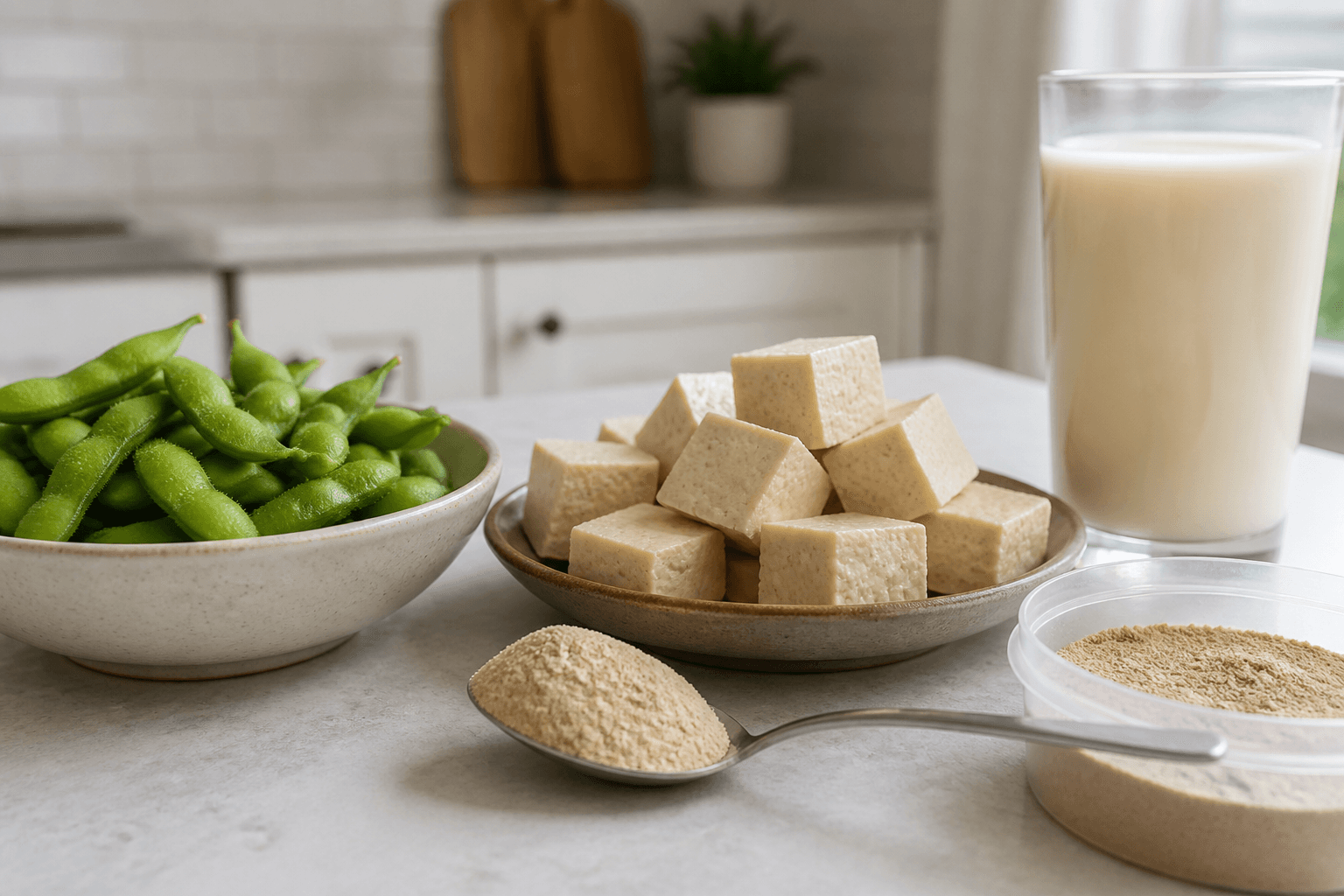
Whey is leucine-dense. Many plant isolates are not. If research often cites about 2–3 g of leucine as a useful per-meal trigger in mixed populations, a plant athlete may need a larger serving or a soy-forward blend to land in the same neighborhood. That is composition, not a ranking of moral worth, and it is not a reason to swallow BCAA capsules on an empty stomach.
Daily totals still come first: do plant-based runners need more protein covers the 1.2–2.0 g/kg band from ACSM 2016. This page is the per-meal leucine overlay.
The numbers behind the gap
Leucine is usually expressed as a percentage of total protein. Gorissen et al. (2018) measured commercial isolates; whey sits near the top, plant isolates lower. Approximate working figures:
| Protein source | Leucine (% of protein, approx.) | Protein needed for ~2.5 g leucine |
|---|---|---|
| Whey isolate | ~10–11% | ~23 g |
| Soy protein isolate | ~8% | ~31 g |
| Pea protein isolate | ~7–8% | ~31–36 g |
| Rice protein isolate | ~8% | ~31 g, lysine-light unless blended |
| Whole lentils | ~7% | ~36 g protein — and a fiber bomb |
The gap between whey and a decent plant isolate is real and modest — roughly a third more protein per serving — not a twofold gulf. Digestibility compounds it slightly (van Vliet, Burd, and van Loon, 2015), which is why “about a third more, or choose soy” is a working adjustment rather than a precise correction.
A 20 g scoop of pea protein is not a failed food. It is a smaller leucine dose than a 20 g scoop of whey. Drink more of it, or put tofu next to it, or pick a soy-forward powder that publishes an amino acid panel.
Numbers shift by brand. Gorissen’s paper is a map of commercial isolates, not a promise that your tub matches the mean. If the label lists leucine in milligrams, use that. If it lists only “protein 20 g” with no amino acids, assume you are on the plant-isolate side of the table and size the serving up, or add 150 g of tofu (16 g protein) beside the shake.
Practical meals that clear a working bar
These are kitchen portions, not lab infusates. They aim near 2.5 g of leucine using foods vegan runners actually swallow.
| Situation | Weaker leucine plate | Stronger leucine plate |
|---|---|---|
| Post-long-run | Rice, vegetables, 1 tbsp seeds | White rice, 250 g firm tofu, banana, maple |
| Hotel, low appetite | Black coffee and a banana | 750 ml fortified soy milk blended with banana and maple |
| Training dinner | Pasta and marinara only | Pasta plus 200 g tofu or 1 cup lentils (training week) |
| Powder | Half a mystery scoop in water | A soy or blend scoop that lists leucine, plus food if the scoop is small |
Worked examples that clear roughly 2.5 g of leucine:
- 250 g firm tofu (~27 g protein in the same ratio as the 150 g / 16 g table row).
- About 750 ml fortified soy milk (~24 g protein) — more volume than tofu, useful when chewing is unappealing.
- ~30 g soy protein isolate plus a banana if you already use powder.
- 200 g tofu, rice, and a side of edamame in a training week — edamame is 8 g of fiber per cup, so it stays off the race-week tray.
A 70 kg runner who wants four sittings near 2–2.5 g leucine is looking at tofu or soy milk at breakfast (soy milk is weaker per cup, so breakfast may be cereal-plus-soy or a larger carton), tofu at lunch, tofu or lentils at dinner in training weeks, and a recovery smoothie after the long run. That is repetitive on purpose. Variety is for micronutrients across the week, not for inventing a low-leucine dinner of pasta and oil the night after 32 km.
Ivy et al. (2002) is about glycogen when carbohydrate and protein are co-ingested, not about leucine grams. Still, the recovery meal should do both jobs: refill carbohydrate and supply a complete protein serving. A leucine tablet in water without carbs after a marathon is the wrong tool.
Why blends beat single-source powders
A pea-only isolate is low in methionine. A rice-only isolate is low in lysine. Blending the two produces a more complete essential amino acid profile, which is why most serious plant sports powders are blends. Soy alone is already reasonably complete, which is its practical advantage in food form.
When comparing products, look for a published amino acid profile. A powder that will not disclose leucine is asking you to trust marketing.
Garden of Life Sport Organic Plant-Based Protein has carried a Certified Vegan trademark on lots reviewed here — reconfirm. Vega Sport Premium Protein is a pea-forward blend, manufacturer-confirmed vegan, not auto-promoted to Certified Vegan. Orgain Organic Plant-Based Protein is manufacturer-confirmed and often higher in carbohydrate, which can help a recovery drink.
Tailwind Rebuild is whey. Skratch Recovery contains milk protein. Both fail the vegan test and still get grabbed because the hydration line is plant-based. Status table: dairy-free recovery protein.
Maurten and Neversecond gels remain race carbohydrate. They do not replace the recovery serving. Count leftover packets toward extra glycogen after the long run if you still have them; they still need a soy sitting beside them.
Race week: leucine without lentil fiber
The working fiber ceiling used on plantbaes.net for the last 36–48 hours is about 15 g per day. A 1.5-cup lentil soup is 15 g by itself. Leucine from legumes is the wrong tool that week.
Keep firm tofu (150 g is 16 g protein and 1 g fiber) and fortified soy milk. A small tempeh cap (50 g, 10 g protein, 3 g fiber) only if you already know it sits well. That is a fiber decision, not a leucine holiday. Two tofu sittings plus a large soy-milk drink will get a 70 kg runner through 48 hours without beans and without a new tub of BCAAs. That is not exciting cooking. It is how leucine and a 15 g fiber budget occupy the same kitchen.
Do not add a new BCAA product on Thursday. Unfamiliar amino-acid mixes are a GI experiment you do not need beside 8–12 g/kg of carbohydrate.
What this does not justify
It does not justify isolated BCAA supplements as a substitute for food. It does not justify treating plant protein as inadequate. It does not justify a ferritin or B12 story — those are iron and B12 jobs.
It justifies one adjustment: slightly larger servings, distributed across the day, favouring soy where convenient, with powder as a swallowing aid after long runs.
BCAAs are sold to endurance athletes as “insurance.” Isolated leucine can raise plasma leucine without providing the other essential amino acids used as substrate. If your serving of tofu or soy isolate already supplies the leucine, the extra capsules are redundant. If your serving is too small, the fix is more food, not a second product with a race-week GI unknown.
Frequently asked questions
How much leucine do I need per meal?
Which plant proteins are highest in leucine?
Do I need more plant protein than whey to get the same effect?
Should vegan runners take BCAA or leucine supplements?
Does leucine matter for endurance runners or only for lifters?
What should I eat after a long run to hit leucine without much fiber?
Is race week the time to add leucine pills?
Sources
- van Vliet, S., Burd, N. A., & van Loon, L. J. C. (2015). The skeletal muscle anabolic response to plant- versus animal-based protein. Journal of Nutrition.
- Gorissen, S. H. M., et al. (2018). Protein content and amino acid composition of commercially available plant-based protein isolates. Amino Acids.
- Thomas, D. T., Erdman, K. A., & Burke, L. M. (2016). ACSM Joint Position Statement: Nutrition and Athletic Performance.
- Ivy, J. L., et al. (2002). Early postexercise muscle glycogen recovery is enhanced with a carbohydrate-protein supplement. Journal of Applied Physiology.
Educational content only. Carbohydrate, fiber, iron, B12, and hydration needs vary. Consult a sports dietitian or physician for individualized guidance — especially if you have a GI condition, anemia, or a history of underfueling.