
Recipes
The 30-Minute Vegan Post-Marathon Recovery Meal
Refill glycogen with rice or a soy smoothie, add about 0.3 g/kg protein, and skip expo chocolate milk. Tailwind Rebuild and Skratch Recovery are dairy.
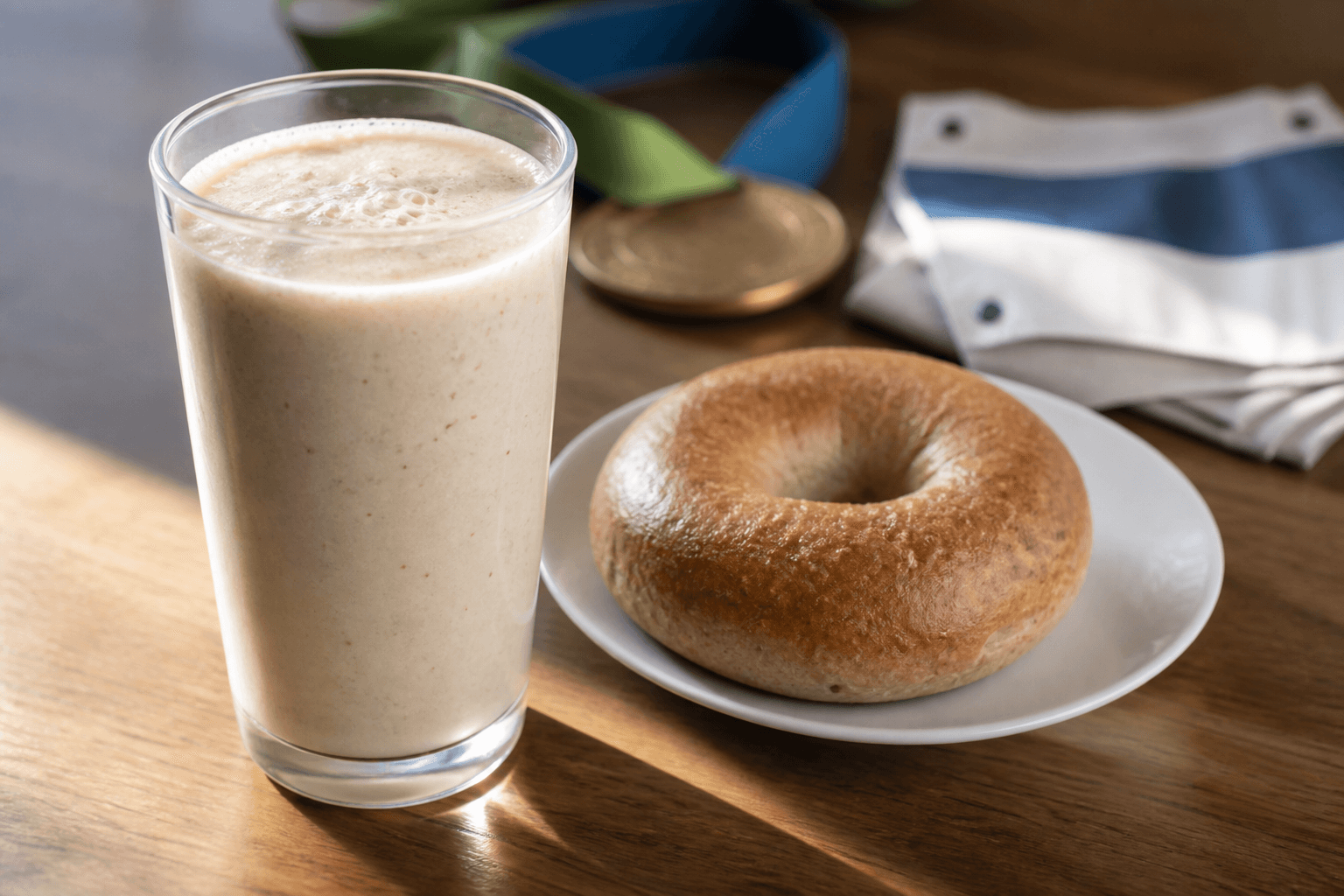
Finish-line chocolate milk is a studied carb-protein vehicle — and usually not vegan. Bring your own soy smoothie (the recipe on this page) or a bagel-and-tofu kit. The job is simple: replace fluid and sodium, refill glycogen, and supply about 0.3 g of protein per kg. Appetite is often gone, so the plan has to survive not wanting to chew.
ACSM 2016 still puts recovery in that carbohydrate-plus-protein frame. Ivy et al. (2002) found faster muscle glycogen recovery when carbohydrate was paired with protein versus carbohydrate alone in that study. Later practice is less obsessed with a 30-minute stopwatch: get carbohydrate in when you can swallow, include a complete protein serving, and eat a real meal later. Plant proteins need a slightly larger serving to approach the leucine dose of whey (van Vliet 2015; Gorissen 2018), which is why this smoothie uses soy milk and silken tofu.
The smoothie when you cannot chew
This is the one dish. Pack a bottle, silken tofu if you can keep it cool, a banana, maple, and a carton of sweetened fortified soy milk. Blend at the hotel, or shake in a lidded bottle at the finish.
Approximate macros from the plantbaes.net table:
- 400 ml sweetened soy milk (~1.7 cups): ~25 g carbohydrate, 12 g protein, 2 g fiber
- 150 g silken tofu: 4 g carbohydrate, 8 g protein, 0.5 g fiber
- 1 ripe banana: 27 g carbohydrate, 1 g protein, 3 g fiber
- 2 tbsp maple: 26 g carbohydrate, 0 g fiber
Sitting total: about 82 g carbohydrate, 21 g protein, 5.5 g fiber. That hits the 0.3 g/kg protein target for a 70 kg runner and puts a serious dent in glycogen without asking you to fork rice in a crowd.
Sip 500 ml of water or a practised mix alongside. Maurten Drink Mix 160 (40 g carbohydrate) or Tailwind Endurance Fuel adds more glycogen if the smoothie was all you could face. Tailwind Rebuild is whey. Skratch Recovery contains milk protein. They sit in the same brand colours as vegan hydration. Leave them on the table.
The rice plate when you can chew
If appetite allows solids, eat them. Glycogen refill is easier with more carbohydrate than one smoothie.
A workable plate: 1.5 cups cooked white rice (68 g carbohydrate, ~1 g fiber, 6 g protein), 150 g firm tofu (16 g protein, 1 g fiber), one banana, 2 tablespoons maple, soy sauce, salt. That is roughly 120 g carbohydrate and 23 g protein.
A white bagel instead of rice is 55 g carbohydrate if you only have bakery access. Add maple and banana the same way.
| Option | Carbs (g, approx.) | Protein (g) | Fiber (g) | Use when |
|---|---|---|---|---|
| Soy smoothie (this recipe) | 82 | 21 | 5.5 | Nausea, no chew, finish-line bag |
| Rice, tofu, banana, maple | ~120 | ~23 | ~5 | You can face a plate |
| Bagel, banana, maple, soy milk | ~108+ from milk | ~18 | ~6 | Hotel toaster, no rice cooker |
Beans can return at the next meal. You do not need chili in the first 30 minutes. You also do not need to stay on white rice until Wednesday. Training-style plates are in high-carb dinner bowls.
If nausea is in charge
Many finishers cannot face either plate for 20–40 minutes. That is ordinary. Start with fluid and sodium. Water is fine. A practised Skratch Sport Hydration or Tailwind Endurance serving is better if you are salty and still need grams. Then sip the smoothie. Solids wait.
Do not use nausea as a reason to accept the dairy carton in the recovery tent. Do not use it as a reason to skip carbohydrate until dinner. Liquid carbs still refill glycogen. If the smoothie will not stay down, sip the drink mix and try again in 15 minutes. A leftover Maurten Gel 100 or Neversecond C30 is acceptable extra carbohydrate if you have water; it is not the protein serving.
Once you can chew, you do not have to finish the rice in the parking lot. Hotel, sofa, or a quiet corner of the village all count. The “30-minute” in the title is a packing prompt — have the food ready — not a metabolic cliff. If family is insisting on a brunch reservation, order white starch and tofu or skip the restaurant and eat the bag you packed. A high-fiber vegan bowl at the celebration restaurant is how people spend the afternoon in the bathroom instead of on the sofa.
What each component is doing
| Component | Supplies | Why it matters now |
|---|---|---|
| White rice or bagel | ~55–80 g carbohydrate | Glycogen, the largest deficit |
| Soy milk + silken tofu (or firm tofu) | ~16–21 g protein | Repair; soy is the highest-leucine common plant option |
| Banana | ~27 g carbohydrate, potassium | Easy to eat or blend when appetite is low |
| Maple syrup | ~26 g carbohydrate | Carbohydrate with essentially no volume |
| Salt / soy sauce | Sodium | Fluid retention after sweat losses |
| Water or carb drink | Fluid ± extra grams | The first thing you can actually get down |
| What people grab | Problem | Swap |
|---|---|---|
| Expo chocolate milk | Usually dairy | This soy smoothie |
| Tailwind Rebuild | Whey — not vegan | Endurance Fuel for carbs, or a plant powder in water |
| Skratch Recovery | Milk protein — not vegan | Skratch Sport Hydration for fluid, plus the smoothie |
| Protein powder in water only | Misses most of the glycogen job | Powder in a carb drink, or the smoothie as written |
| Maurten / Neversecond gels as “recovery” | Carbs without protein, and you already used them for 42 km | Fine as extra grams if you have packets left; still add soy |
Garden of Life Sport Organic Plant-Based Protein (Certified Vegan trademark on lots checked — reconfirm), Vega Sport Premium Protein, and Orgain Organic Plant-Based Protein can replace silken tofu in a pinch. Mix into the soy milk and banana, not into Rebuild. Statuses live on the catalog linked below.
Pack it the night before, then eat again later
Whatever you plan to swallow has to be in a bag you can reach. Race villages are unreliable. The vegan option is often a banana and a shrug. A carton of soy milk, a banana, maple, and a bottle require no stove. Freeze a silken-tofu pack against an ice sheet in the drop bag if the finish is hours after you leave the hotel; if that is not practical, skip the tofu and use a checked plant scoop in the soy milk instead.
Start fluid in the chute after you finish, even if food waits 20 minutes. Then the smoothie. A few hours later, eat a full meal — chili included. The ~15 g fiber ceiling on plantbaes.net was a race-week gut tool. It expires at the finish.
Do not treat this sitting as the time to “fix” iron with a new tablet. Do not add an untested B12 megadose because you feel depleted. Those are training-block decisions. Race day leftover gels (Maurten, Neversecond) are leftover carbohydrate, not vitamins.
Daily protein context: plant-based protein for runners. Per-meal leucine: leucine and plant protein.
Frequently asked questions
What should vegans eat after a marathon?
How soon should I eat after a marathon?
Is chocolate milk good for recovery?
How much protein do I need after a marathon?
Can I eat beans again after the race?
What if I feel too sick to eat after finishing?
Do I need a recovery powder?
Sources
- Thomas, D. T., Erdman, K. A., & Burke, L. M. (2016). ACSM Joint Position Statement: Nutrition and Athletic Performance.
- Ivy, J. L., et al. (2002). Early postexercise muscle glycogen recovery is enhanced with a carbohydrate-protein supplement. Journal of Applied Physiology.
- van Vliet, S., Burd, N. A., & van Loon, L. J. C. (2015). The skeletal muscle anabolic response to plant- versus animal-based protein. Journal of Nutrition.
- Gorissen, S. H. M., et al. (2018). Protein content and amino acid composition of commercially available plant-based protein isolates. Amino Acids.
Educational content only. Carbohydrate, fiber, iron, B12, and hydration needs vary. Consult a sports dietitian or physician for individualized guidance — especially if you have a GI condition, anemia, or a history of underfueling.