
Product guides
Vegan Electrolyte Drink Mixes Ranked by Use-Case, Not Vibes
Carb sports drinks vs sodium-only packets, with vegan status on every row. Tailwind Rebuild and Skratch Recovery are dairy — do not grab them by logo.
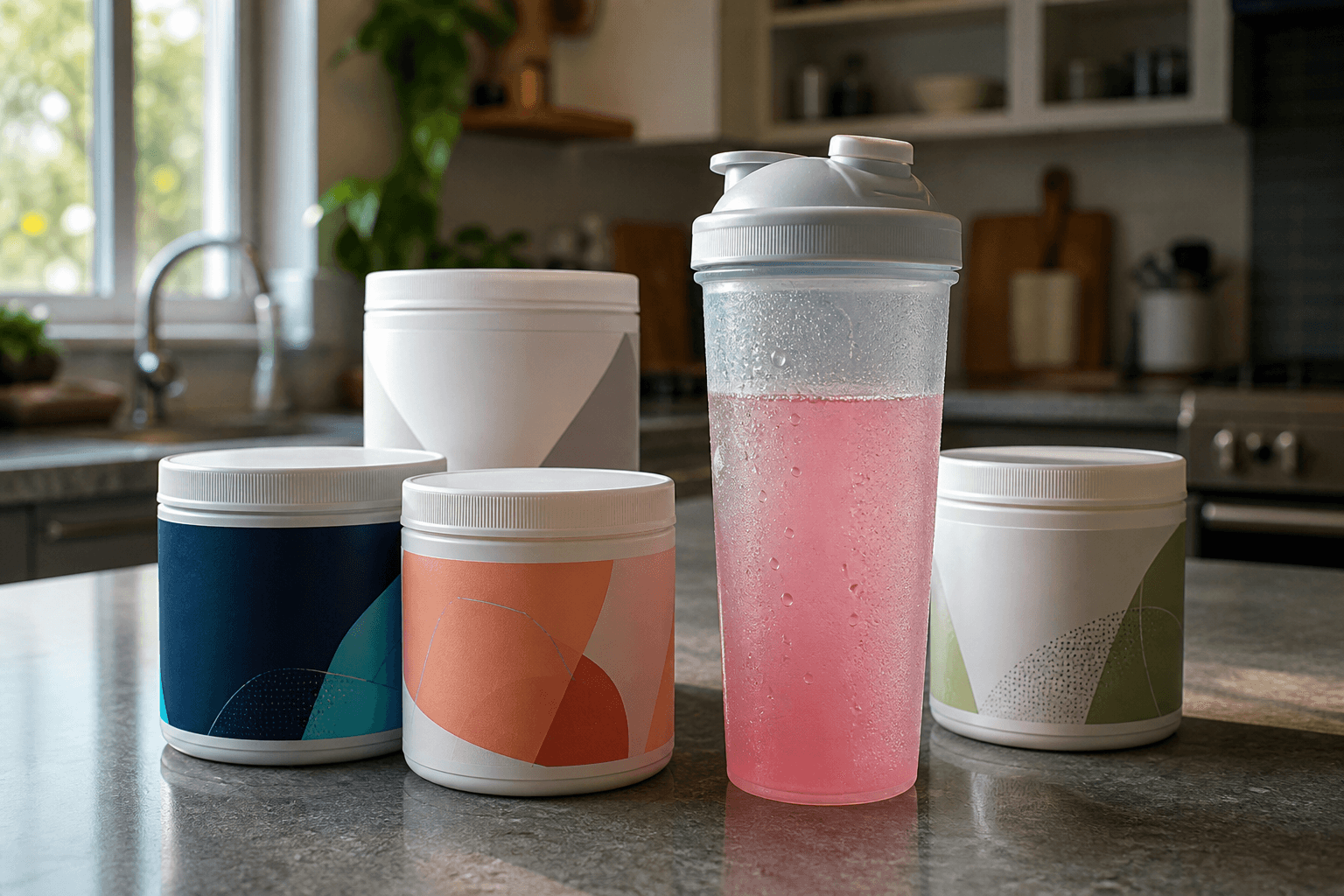
Most electrolyte drink mixes are vegan because they are salts, carbohydrate, and flavouring. The products that are not vegan on this shelf are recovery mixes that look like hydration: Tailwind Rebuild uses whey, and Skratch Recovery uses milk protein. Rank the bottle by job — carbohydrate plus fluid, or sodium only — then confirm status on the specific SKU, not the tent logo.
“Ranked” here means matched to a job. It is not a numeric score with no method. Status labels follow the methodology page: Certified Vegan, manufacturer-confirmed, ingredient-list verified, unclear, or not vegan. None of the hydration rows below is Certified Vegan on the August 2026 catalog.
Carb fuel versus sodium-only: two different products
A sports drink does two jobs at once. It supplies carbohydrate toward the 60–90 g per hour marathon target (Jeukendrup, 2011; ACSM 2016) and it supplies sodium in the fluid that helps that carbohydrate empty and absorb.
A sodium-only sachet or a low-carb tablet does one job. LMNT is about 1000 mg of sodium and 0 g of carbohydrate. Precision Hydration 1500 is about 1500 mg and 0 g. Nuun Sport is about 4 g of carbohydrate. Vega Sport Electrolyte Hydrator is about 1 g. Using any of those as “the bottle” and then wondering why you bonked is a recognisable failure mode.
The vegan question is usually easy on the hydration side and hard on the recovery side. Honey is an aid-station gel problem. Gelatin is a chew problem. Whey is a canister that says Recovery.
Carbohydrate sports drinks worth counting
These catalog rows count toward hourly carbohydrate. All five are manufacturer-confirmed vegan on current brand language. None is Certified Vegan here. Last verified August 2026.
| Product | Carbs / serving | Sodium | Status | Best when |
|---|---|---|---|---|
| Skratch Super High-Carb | 100 g | 400 mg | Manufacturer-confirmed | You want to drink most of an hour’s carbs |
| Maurten Drink Mix 160 | 40 g | 160 mg | Manufacturer-confirmed | You want 40 g in the bottle and will get sodium elsewhere |
| Neversecond C30 Sports Drink | 30 g | 380 mg | Manufacturer-confirmed | Easy 30 g math with useful sodium |
| Tailwind Endurance Fuel | 25 g | 310 mg | Manufacturer-confirmed | You already train on Tailwind; serving is often 2 scoops |
| Skratch Sport Hydration | 21 g | 380 mg | Manufacturer-confirmed | You want more sodium than Maurten 160 and some carb |
Two bottles of a 40 g mix is 80 g — most of an hour’s fuelling on its own. Count it. Adding four gels on top of two Maurten bottles is how people feel sick at 28 km, not how they “cover their bases.”
Tailwind’s labelled serving is often two scoops. The catalog number is per labelled serving. If you scoop by eye in a hotel sink, you do not know the grams. Caffeinated Tailwind exists at about 35 mg per serving; match that against coffee and caffeinated gels.
Maurten’s sodium is the outlier on the low side. If the rest of the belt is also Maurten gels (~35 mg each), the day’s salt is thin in heat. Pair Drink Mix 160 with salty food, with Skratch Sport Hydration in a second bottle, or with a practised sodium-only sachet — not with a guess at the expo.
Super High-Carb is a specialist tool. One serving is roughly a full hourly carbohydrate target. Practise that concentration on a long run. A mix made too strong is a frequent cause of mid-race nausea. It is still manufacturer-confirmed vegan. Status does not make 100 g gentle.
Brand-level Maurten and Skratch detail, including the dairy Recovery canister, is in Maurten, GU, and Skratch.
Sodium-only packets and low-carb tablets
These products manage fluid and sodium. They do not replace gels.
| Product | Carbs | Sodium | Status | Race job |
|---|---|---|---|---|
| LMNT | 0 g | ~1000 mg | Manufacturer-confirmed | Extra sodium; pair with a carb source |
| Precision Hydration 1500 | 0 g | ~1500 mg | Manufacturer-confirmed | High sweat-sodium; still need fuel |
| Nuun Sport | 4 g | 300 mg | Manufacturer-confirmed | Mild tablet; not a sports drink |
| Vega Sport Electrolyte Hydrator | 1 g | 170 mg | Manufacturer-confirmed | Light sodium; do not read Vega as Certified Vegan |
LMNT and PH 1500 are useful for salty sweaters, pre-race sodium in heat, and rehydration after a session when you do not want more sugar. Dumping 1500 mg into a stomach that has never seen it, on top of soy sauce from last night’s pasta, is how people feel swollen and thirsty for a reason that is not “needs more salt.”
Precision Fuel gels contain 0 mg of sodium. If the belt is all PF 30, sodium has to come from PH 1500 or from another drink. That pairing is a system, and both pieces are manufacturer-confirmed vegan. It is not a reason to grab Skratch Recovery because it “has electrolytes.”
Vega’s hydrator is a plant-based brand’s sodium packet. Manufacturer-confirmed is not Certified Vegan. Do not promote the whole Vega line because one tub says plant-based. Vega Sport Premium Protein is a different SKU with its own row.
The recovery canisters that are not vegan
This is where the vegan question actually bites.
| Looks like hydration | Actually is | Animal ingredient | Status |
|---|---|---|---|
| Tailwind Rebuild | Post-session protein mix | Whey | Not vegan |
| Skratch Recovery Sport Drink Mix | Post-session protein mix | Milk protein | Not vegan |
| Tailwind Endurance Fuel (same logo) | Carb + sodium drink | None stated | Manufacturer-confirmed |
| Skratch Sport Hydration (same logo) | Carb + sodium drink | None stated | Manufacturer-confirmed |
Both dairy products sit next to the vegan canisters at many expos, in the same brand livery. A runner who decided “Tailwind is vegan” is exactly the runner who picks up Rebuild. Honey Stinger is the gel-table equivalent: not vegan, often handed out, easy to grab when you are tired.
Garden of Life Sport protein, Vega Sport Premium Protein, and Orgain belong on the recovery page, not in the race bottle. Filter format = protein on the catalog, or read dairy-free recovery protein. Garden of Life Sport is the rare Certified Vegan row, with a reconfirm-the-lot caveat. Vega and Orgain are manufacturer-confirmed. None of them is a mid-race sports drink.
How much sodium a marathon actually needs
Sawka and the ACSM fluid-replacement stand (2007) still set the practical band: typical sports drinks around 300–600 mg of sodium per litre, drink to limit both dehydration and overdrinking. Hew-Butler and the hyponatremia consensus (2015) keep pointing at hypotonic fluid in slower athletes who drink to a schedule.
Sodium is the electrolyte that changes plasma osmolality in a marathon-relevant way. Potassium, magnesium, and calcium in a typical tablet are present in amounts too small to matter over a few hours. Marketing a “complete electrolyte profile” does not make Nuun a fuel.
Sweat sodium varies several-fold between people. White marks on kit, sting in the eyes, and a history of cramping that actually tracked with long hot runs are clues, not lab values. If you have never used PH 1500 in training, race morning is not the first trial.
Heat raises both fluid and sodium losses. That adjustment belongs in long runs that were actually warm. Gut tolerance for fluid is trainable. Practise drinking at the hourly rate you intend to use. A field check — weigh before and after a one-hour run in similar weather, account for fluid drunk, treat 1 kg lost as about 1 litre of sweat — is messy and still better than guessing.
Race morning is a top-up, not a second carb-load’s worth of drinking. Details: vegan race-morning hydration.
Match the mix to the situation
| Situation | Reach for | Do not reach for |
|---|---|---|
| Marathon, cool conditions | Carbohydrate sports drink (Neversecond C30, Tailwind, Skratch Sport Hydration, Maurten 160) | Sodium-only as the only bottle |
| Marathon, hot conditions, salty sweater | Carb drink plus practised extra sodium (LMNT or PH 1500) | A new 1500 mg sachet on Sunday |
| Wanting to drink most of your carbs | Skratch Super High-Carb or two bottles of Maurten 160, counted | The same gels on top as if the bottle were water |
| Easy run under an hour | Water | Anything, unless it is a gut-training session |
| Rehydrating after a hot session, no more sugar wanted | LMNT or PH 1500 in water | Skratch Recovery / Tailwind Rebuild |
| Precision Fuel gel belt (0 mg sodium) | PH 1500 or another sodium drink you trained | Guessing salt tabs at kilometre 30 |
| Hotel lobby, race morning | The powder from long runs | Fruit punch, expo shots, mystery urn |
Cool-weather marathons still need carbohydrate in the bottle or in the belt. Heat adds sodium and fluid, not a different vegan rule. Easy runs do not require a mix; using one on a long-run dress rehearsal is training, not a mineral deficiency.
Practise the concentration, not just the brand
A mix made too strong is a frequent cause of mid-race nausea. Hotel-room measuring is less accurate than the kitchen scoop you use at home. Fix the ratio in training and reproduce it on race day: same scoop, same bottle volume, same flavour.
If Tailwind’s serving is two scoops in 500 ml at home, do not put four scoops in a 500 ml handheld because the course looks hot. If Super High-Carb is one serving in 500 ml, do not reduce the water to “make it easier to carry.” Osmotic load is the variable the gut notices.
Flavour lines change. A new “limited” Skratch or Tailwind flavour is a new panel. Recheck. Caffeinated and non-caffeinated Tailwind share a tub style; separate them physically.
Aid-station cups are not your concentration. Unknown sugar, unknown sodium, unknown vegan status. Carry the bottle or take water with a gel you own. Hourly targets: vegan race-day fueling.
How to shop the catalog without guessing
Filter format = drink mix on the verification-status catalog. Read carbohydrate and sodium on the same row as status. Hide not_vegan if you are building a plant-based list; leave unclear hidden unless you have a reason to opt in.
Then put finish time and grams per hour into the planner so the bottle is part of the hourly math, not a separate personality from the gels.
Frequently asked questions
Are electrolyte drink mixes vegan?
What is the difference between a sports drink and an electrolyte tablet?
How much sodium should a drink mix contain?
Which drink mix is best for carb loading and racing?
Is LMNT vegan?
Is Tailwind vegan?
Do I need electrolytes for a marathon?
Can I use Nuun or Vega hydrator as race fuel?
Sources
- Sawka, M. N., et al. (2007). American College of Sports Medicine position stand: exercise and fluid replacement.
- Thomas, D. T., Erdman, K. A., & Burke, L. M. (2016). ACSM Joint Position Statement: Nutrition and Athletic Performance.
- Hew-Butler, T., et al. (2015). Statement of the Third International Exercise-Associated Hyponatremia Consensus Development Conference.
- Jeukendrup, A. E. (2011). Nutrition for endurance sports: marathon, triathlon, and road cycling. Journal of Sports Sciences.
- plantbaes.net product verification methodology.
- plantbaes.net product catalog, last verified August 2026.
Educational content only. Carbohydrate, fiber, iron, B12, and hydration needs vary. Consult a sports dietitian or physician for individualized guidance — especially if you have a GI condition, anemia, or a history of underfueling.