
Marathon fueling
Vegan Race Morning Hydration and Electrolyte Loading
Start euhydrated: 400–600 ml in the two hours before the gun, with sodium in the morning bottle. Skip a gallon of plain water and the hotel-lobby fruit punch.
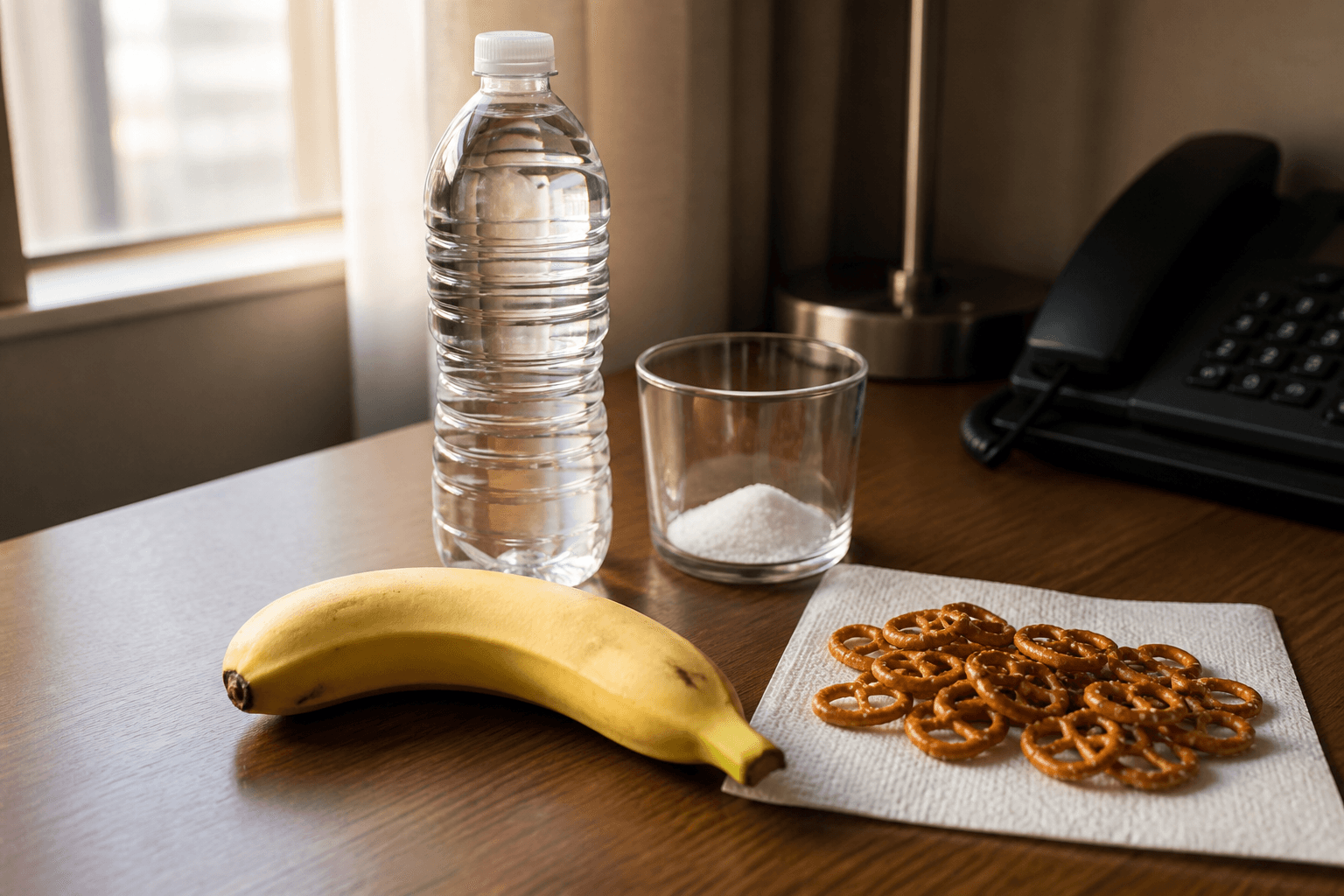
Start the marathon euhydrated: pale-yellow urine, about 400–600 ml of fluid in the two hours before the gun, and sodium in that fluid if you are a salty sweater. Do not drink a gallon of plain water. A completed carb load has already stored water with glycogen, and overdrinking without sodium is how exercise-associated hyponatremia gets a head start (Sawka et al., 2007; Hew-Butler et al., 2015).
Bring the vegan-status-checked powder you used in long runs. The hotel-lobby punch is not in your catalog.
The morning pattern, hour by hour
Sawka and the ACSM fluid-replacement stand (2007) start from euhydration, not from a chug contest. If you are not already there, they describe about 5–7 ml per kg at least four hours before exercise — 350–490 ml for a 70 kg runner — and another 3–5 ml/kg about two hours out if urine is still dark. The 400–600 ml "in the two hours before the start" range most coaches use is that guidance translated into a race-morning bathroom schedule.
A workable clock for a 7:00 a.m. gun:
- Night before. Carbohydrate foods already contain water. Drink with dinner to thirst. Do not down a litre at lights-out.
- Wake (often 3:30–4:30). Check urine color. Eat the practised breakfast. Start the bottle.
- Two hours to 15 minutes pre-gun. 400–600 ml total in this window is enough for most temperate starts, including the fluid in coffee if you count it.
- Last 15 minutes. Small sips only. You want an empty-enough stomach to run, not a last nervous 300 ml.
Coffee counts as fluid. It is a poor sodium source. If the morning cup is 250 ml, the remaining bottle is smaller, not extra.
Bathroom access matters more than a spreadsheet. A 5:30 a.m. bus with no toilet is a reason to finish the larger volume earlier, not a reason to skip fluid altogether.
Pale urine, 400–600 ml across the two hours before the gun, small sips in the last 15 minutes. ACSM's ml/kg figures are the published map; the bathroom line is the constraint.
The carb load already hydrated you
Glycogen is stored with roughly three grams of water per gram of carbohydrate stored. A 70 kg runner who actually hit 8–12 g/kg over 36–48 hours (see the vegan carb loading guide) is carrying extra body water before the first sip on Sunday.
That is a reason the scale rose 1–2 kg. It is also a reason aggressive race-morning drinking is redundant. You are topping up, not filling a dry tank.
Thirst is a better guide than a fixed millilitre religion. Hew-Butler and the hyponatremia consensus (2015) keep pointing at overdrinking — especially of hypotonic fluid — in slower athletes who drink to a schedule. Plant-based runners are not exempt because the water came with maple syrup the day before.
If urine is already pale at wake-up and you are not thirsty, do not force a second bottle "because marathon." Take the planned 400–600 ml including breakfast fluid and stop.
Stored glycogen brings water with it. Race morning is a top-up to pale urine, not a second carb-load's worth of drinking.
Sodium: how much, and from which packet
Many "vegan waters" have none. Sodium is the electrolyte that changes plasma osmolality in a marathon-relevant way. Typical sports drinks land around 300–600 mg of sodium per litre (Sawka et al., 2007; Thomas, Erdman & Burke, 2016). Heavy or salty sweaters in heat may need more; that is a training observation (salt marks, sting in the eyes, history of cramping that actually tracked with long hot runs), not a personality type.
| Product | Sodium / serving | Carbs / serving | Race-morning job |
|---|---|---|---|
| Skratch Sport Hydration | ~380 mg | ~21 g | Fluid + some carb + sodium |
| Tailwind Endurance Fuel | ~310 mg | ~25 g | Same; watch caffeinated flavors |
| Neversecond C30 Sports Drink | ~380 mg | ~30 g | Easy carb math in the bottle |
| Maurten Drink Mix 160 | ~160 mg | ~40 g | More carb than sodium — still fine if food was salty |
| LMNT | ~1000 mg | 0 g | Sodium only; pair with bagel or gel |
| Precision Hydration 1500 | ~1500 mg | 0 g | High-sodium, no fuel |
All of the above are manufacturer-confirmed vegan on current brand language except where a different SKU in the same livery is not. Tailwind Rebuild and Skratch Recovery contain dairy protein. They sit on the same expo table. Status lives in the electrolyte drink mix guide, not on the tent logo.
A few hundred milligrams with the morning bottle covers most people. Dumping 1500 mg of PH 1500 into a stomach that has never seen it, on top of soy sauce from last night's pasta, is how people feel swollen and thirsty for a reason that is not "needs more salt."
Sweat sodium varies several-fold between individuals. White marks on kit after long runs are a clue, not a lab value. If you have never used a high-sodium sachet in training, race morning is not the first trial.
Sodium belongs in the morning fluid, usually a few hundred milligrams from a mix you already use. LMNT and PH 1500 are sodium without carbohydrate — pair them with food, and only if you practised that dose.
Carb drinks versus sodium-only packets
The usual error is buying a product for the wrong job.
| Before (wrong tool) | After (matched tool) |
|---|---|
| LMNT in the only bottle, no carbs, then wondering why breakfast felt small | Skratch, Tailwind, Neversecond C30 drink, or Maurten 160 in the bottle; LMNT only if you already need extra sodium |
| Two bottles of plain water because "electrolytes are a gimmick" | One bottle of a 300–400 mg sodium mix, then thirst |
| Skratch Recovery or Tailwind Rebuild from the expo because the logo matched training | Sport Hydration / Endurance Fuel — recovery SKUs are dairy |
| Nuun or Vega hydrator as "fuel" (few grams of carbohydrate) | A 20–40 g carb mix if the bottle is supposed to count toward the load or the first hour |
Race morning can use a carb mix even if you also eat a bagel. Count those 21–40 g toward breakfast carbohydrate. Do not stack a 100 g Skratch Super High-Carb serving on top of a 110 g bagel breakfast unless that combination was a long-run ritual. Super High-Carb is a race-fuel tool; it is a lot of osmotic load before the gun for someone who already ate.
Gels still need water once the race starts. Maurten Gel 100 and Neversecond C30 are not hydration. Take them at aid stations. The gels and chews catalog is for packets; this page is for the bottle.
| If your morning problem is… | Reach for… | Do not reach for… |
|---|---|---|
| Dry mouth, dark urine, salty sweater | Carb mix with ~300–400 mg sodium, or practised PH 1500 / LMNT plus food | Another litre of plain water |
| Chewing fatigue, need extra carbs | Maurten 160 or Neversecond C30 drink | A sodium-only sachet |
| Nervous stomach, small volume only | Sips of a known mix, skip the second bottle | A new flavor "because it's milder" |
Carb mixes fuel and hydrate together. Sodium-only sachets do one job. Recovery canisters with the same brand mark can be dairy. Match the packet to the job.
Heat, sweat rate, and the hotel-lobby trap
In heat, sweat rate rises and both fluid and sodium needs rise with it. That adjustment belongs in long runs that were actually warm, not as a new litre at 25 km. Gut tolerance for fluid is trainable in the same way as tolerance for carbohydrate (Costa et al., 2017). Practise drinking at the hourly rate you intend to use.
A rough field check: weigh before and after a one-hour run in similar weather, account for fluid drunk, and treat 1 kg lost as about 1 litre of sweat. It is messy. It is still better than guessing. Morning intake does not try to replace a 1.2 L/h race sweat rate in the hotel room — that is what on-course drinking is for.
The complimentary pastry and mystery fruit punch are not rehearsed. Neither is the expo sample shot. Pack sachets for race morning, the race, and one spare. Sourcing a specific mix in an unfamiliar city on Saturday afternoon is a poor use of the day before a marathon.
If you travel, powder in zip bags or official sachets beats a bulk tub. Airport security has seen Tailwind before. They have not approved your plan to "just drink water and eat bananas."
Once the gun goes, drink to thirst, take gels with water, and keep counting bottle carbohydrate toward the hourly total. The hour-by-hour sheet is race-day fueling. This page is only the start line.
Practise heat drinking in heat. Bring the known powder. Hotel punch, expo shots, and a panic litre of plain water are how euhydration turns into a GI or hyponatremia problem.
Frequently asked questions
How much water should I drink before a marathon?
Can you drink too much water before a race?
Do I need electrolytes before a marathon?
Are electrolyte drink mixes vegan?
Should I use a high-sodium mix like LMNT or PH 1500 before a race?
Does carb loading change how much I should drink on race morning?
What should I drink the night before a marathon?
Can I use the hotel fruit punch or expo samples on race morning?
Sources
- Sawka, M. N., Burke, L. M., Eichner, E. R., Maughan, R. J., Montain, S. J., & Stachenfeld, N. S. (2007). American College of Sports Medicine position stand: exercise and fluid replacement.
- Thomas, D. T., Erdman, K. A., & Burke, L. M. (2016). ACSM Joint Position Statement: Nutrition and Athletic Performance.
- Hew-Butler, T., et al. (2015). Statement of the Third International Exercise-Associated Hyponatremia Consensus Development Conference. Clinical Journal of Sport Medicine.
- de Oliveira, E. P., Burini, R. C., & Jeukendrup, A. (2014). Gastrointestinal complaints during exercise. Sports Medicine.
- Costa, R. J. S., et al. (2017). Systematic review: exercise-induced gastrointestinal syndrome. Alimentary Pharmacology & Therapeutics.
Educational content only. Carbohydrate, fiber, iron, B12, and hydration needs vary. Consult a sports dietitian or physician for individualized guidance — especially if you have a GI condition, anemia, or a history of underfueling.