
Recipes
Cream of Rice for Runners: The Oat Swap That Saves Fiber
One cup of cooked cream of rice is 28 g of carbohydrate and 0.5 g of fiber. Add maple and a banana for a race-week breakfast you can actually tolerate.
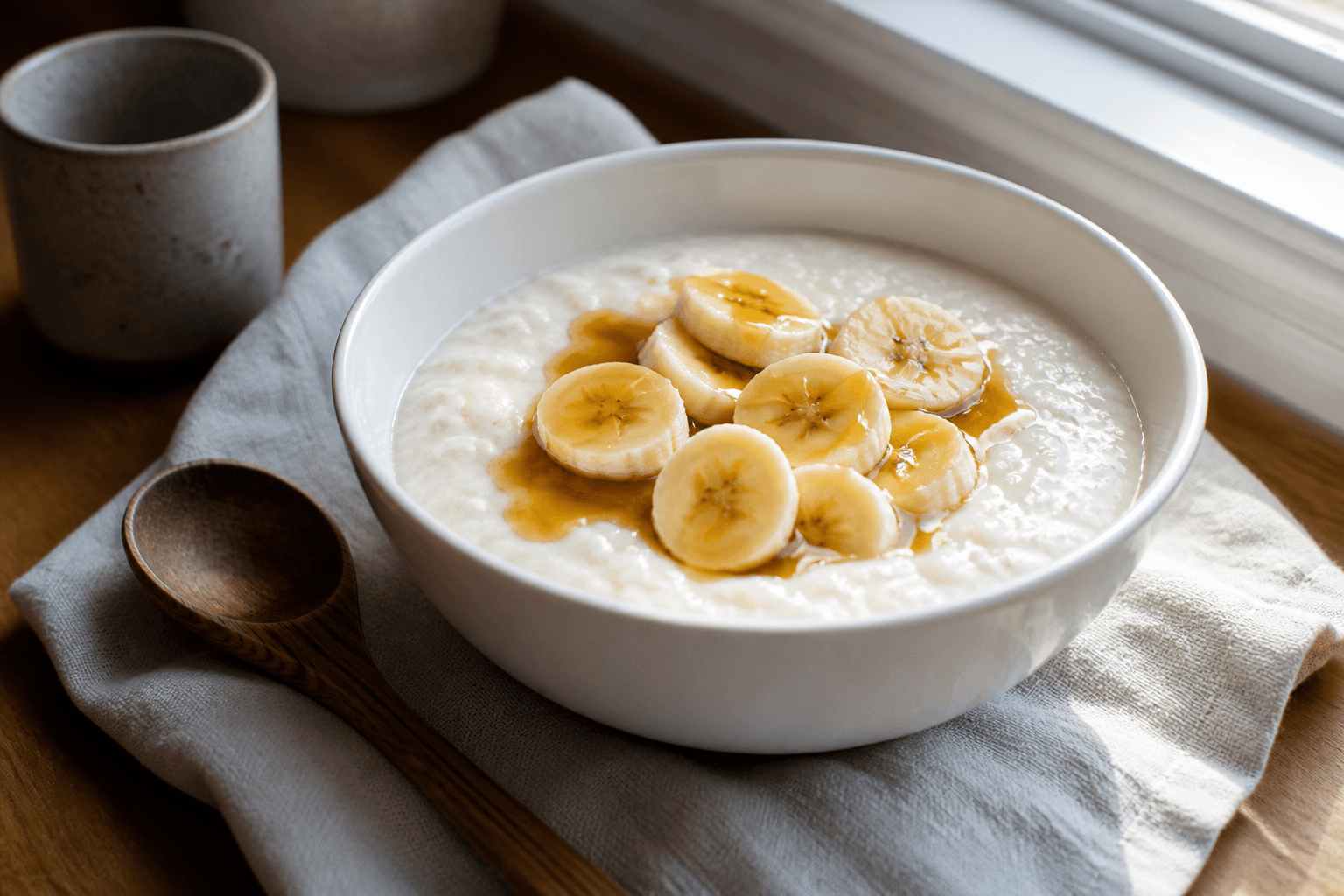
Cream of rice is the warm-bowl swap for oatmeal in race week. One cup cooked is 28 g of carbohydrate, 0.5 g of fiber, and 3 g of protein in the plantbaes.net foods table. Add 2 tablespoons maple (26 g, 0 g fiber) and one ripe banana (27 g carbohydrate, 3 g fiber) and the sitting is about 81 g of carbohydrate and 3.5 g of fiber.
A cup of cooked oats is already 4 g of fiber before chia and berries. That bowl can spend a ~15 g plantbaes.net race-week fiber heuristic before you leave the house. You still need 1–4 g of carbohydrate per kg in the 1–4 hours before prolonged racing (ACSM 2016). Change the cereal, keep the calories.
The bowl, with numbers
This page is one dish. Hotel kettle method: hotel race-morning breakfast. Other plates: low-fiber pre-run breakfasts.
| Component | Carbs (g) | Fiber (g) | Protein (g) |
|---|---|---|---|
| Cream of rice, 1 cup cooked | 28 | 0.5 | 3 |
| Maple syrup, 2 tbsp | 26 | 0 | 0 |
| Ripe banana, 1 medium | 27 | 3 | 1 |
| Sitting total | 81 | 3.5 | 4 |
Optional: 1/4 cup fortified soy milk in the pot. Unsweetened soy is 4 g carbohydrate and 1 g fiber per cup — a splash is a rounding error. Sweetened soy is 15 g per cup if you want liquid grams.
Oats vs cream of rice (same “healthy breakfast” slot)
| Bowl | Carbs (g, approx.) | Fiber (g, approx.) |
|---|---|---|
| Oats + 1 tbsp chia + 1 cup berries | 50 | 15 |
| This cream of rice bowl | 81 | 3.5 |
| White bagel + banana + maple | 108 | 5 |
The oat bowl spends the heuristic and still undershoots a 70 kg runner who wants ~110–175 g three hours out. Cream of rice or the bagel plate is the actual breakfast. Add juice (26 g, 0.5 g fiber per 8 oz) if you need the top of the ACSM range and you have practised that volume.
GI context: residue and untrained intake still matter when you run hard (de Oliveira et al., 2014). Cream of rice is not magic; it is less residue.
When to double the cereal
Carb-load days (vegan carb loading) sometimes want a bigger bowl because pasta is already on the table twice.
Two cups cooked cream of rice: 56 g carbohydrate, 1 g fiber, 6 g protein. Keep one banana and 2 tablespoons maple unless you have used two bananas on long-run mornings (that would be 6 g fiber from fruit alone).
You still will not reach 8–12 g/kg from cereal. Close the gap with load snacks and a manufacturer-confirmed mix such as Maurten Drink Mix 160 (40 g, August 2026, not Certified Vegan).
Practice rules
- Use this bowl on long-run mornings before you use it at 4:30 a.m. in a hotel.
- Keep coffee at the long-run dose (coffee before a marathon).
- Instant packets are fine if the ingredient list is rice. Avoid “multigrain hot cereal” labelled as cream of rice.
- Peanut butter is 3 g of fiber per 2 tablespoons and slows gastric emptying. Training-block topping, not race morning.
Timing: breakfast timing.
Hotel and instant packets
Stovetop cream of rice is this recipe. Instant cups that list rice as the cereal are the travel version — hotel race-morning breakfast. If the cup is “multigrain” or includes chia, it is not this dish.
Reheat leftover cream of rice with water or a splash of soy milk. It thickens in the fridge. Taste a test bowl on a long-run morning before you trust a 4:30 a.m. reheat.
Do not cook it in a nonstick hotel kettle if the kettle is your only boiling water for coffee. Use a microwave mug or a cheap saucepan from a grocery run.
Frequently asked questions
Is cream of rice good for runners?
Is cream of rice lower in fiber than oatmeal?
How do I make cream of rice the night before a race?
Can I use cream of rice for carb loading, not just breakfast?
Does cream of rice have enough protein before a marathon?
Is cream of wheat the same thing?
Can I add protein powder to cream of rice?
How far before a run should I eat it?
Sources
- Thomas, D. T., Erdman, K. A., & Burke, L. M. (2016). ACSM Joint Position Statement: Nutrition and Athletic Performance.
- Burke, L. M., Hawley, J. A., Wong, S. H., & Jeukendrup, A. E. (2011). Carbohydrates for training and competition. Journal of Sports Sciences.
- de Oliveira, E. P., Burini, R. C., & Jeukendrup, A. (2014). Gastrointestinal complaints during exercise. Sports Medicine.
Educational content only. Carbohydrate, fiber, iron, B12, and hydration needs vary. Consult a sports dietitian or physician for individualized guidance — especially if you have a GI condition, anemia, or a history of underfueling.