
Marathon fueling
What to Eat the Night Before a Marathon on a Plant-Based Diet
A low-fiber, high-carb vegan dinner 12–14 hours before the gun: white pasta or rice, small tofu, extra bread. Home, restaurant, and hotel versions.
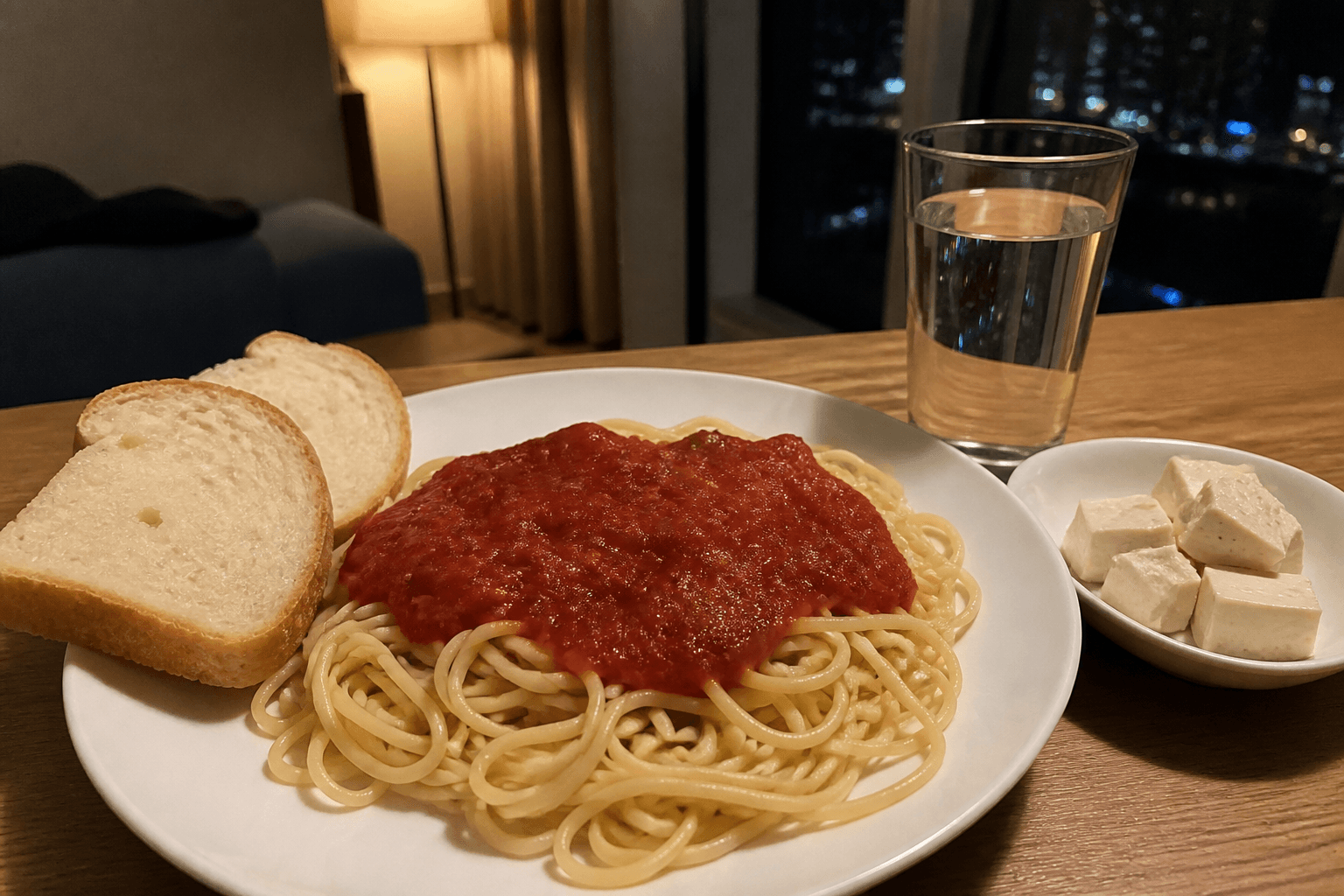
The night-before meal is the last large glycogen deposit and the last easy chance to irritate the gut. Eat a big portion of white pasta, rice, or rice noodles, a small tofu cap, extra bread, and almost no salad or beans. Finish 12–14 hours before an early gun.
This is not the night you “make it count” with a tasting menu. Burke et al. (2011) put the carb load in the 36–48 hours before prolonged racing; dinner is one feeding inside that window, not the whole load. If lunch was thin, you are already behind.
What the vegan night-before plate should look like
| Component | Why it is here | Skip |
|---|---|---|
| White pasta, rice, or rice noodles (large portion) | Carbohydrate, low bran | Whole-wheat pasta, brown rice, quinoa |
| Plain marinara or soy-sauce tofu | Flavor without a bean chili | Garlic-bomb arrabbiata if you are FODMAP-sensitive |
| 150 g firm tofu or 50 g tempeh max | Protein without lentil fiber | Three-bean anything, hummus |
| White roll or extra rice | Easy extra carbs | Salad tower, roasted broccoli |
A 5:30 a.m. bus means dinner at 5–6 p.m., plus a small evening snack (rice cakes, maple, banana if fiber allows). The rest of day −1 is sketched in 3 days before a marathon.
Macros: high-fiber restaurant order vs the race plate
For a 70 kg runner finishing a 10–12 g/kg day, dinner often carries 150–200 g of carbohydrate. It also has to fit a ~15 g fiber ceiling for the whole day, so this plate cannot spend 12 g on whole-wheat pasta alone.
| Item | Portion | Carbs (g) | Fiber (g) | Protein (g) |
|---|---|---|---|---|
| White pasta, cooked | 2 cups | 80 | 3 | 14 |
| Plain marinara | 1/2 cup | 10 | 2 | 2 |
| Firm tofu | 150 g | 3 | 1 | 16 |
| White dinner roll | 1 | 20 | 1 | 4 |
| Pulp-free orange juice | 8 oz | 26 | 0.5 | 2 |
| Plate total | 139 | 7.5 | 38 |
Need closer to 180 g of carbohydrate? Add another cup of pasta (+40 g carbs, +1.5 g fiber) or a second roll and 2 tbsp maple on rice cakes later. Do not add a side salad.
| High-fiber “healthy” order | Fiber (g) | Low-fiber order | Fiber (g) |
|---|---|---|---|
| Whole-wheat pasta, 2 cups | 12 | White pasta, 2 cups | 3 |
| Lentil ragu, 1.5 cups (in the range of lentil soup) | ~15 | Marinara 1/2 cup + tofu 150 g | 3 |
| Side broccoli, 1 cup | 5 | Skip, or peeled cucumber | 0–0.5 |
| Those three together | ~32 | ~6 |
Thirty-two grams of fiber at dinner makes the 15 g daily ceiling impossible. That is how a well-meaning vegan plate becomes runner’s diarrhea at 18 km, independent of how good the race-day gels are.
Restaurant script
Say it plainly: white pasta, no extra vegetables, olive oil or simple tomato, extra bread, no cheese. Confirm the kitchen is not finishing the sauce with butter or cream. If they cannot do vegan without roasted broccoli, switch to rice and steamed tofu.
Book a 5 or 6 p.m. table. Pick somewhere you have eaten before if you are racing in your own city. The night before a marathon is the wrong evening to discover a restaurant’s “house chili.”
Travel races: read the menu online that afternoon. If every vegan option is a grain bowl with beans and cabbage, cook in the room instead. Do not negotiate with a FODMAP pile because you are hungry and polite.
You do not need a sports drink at dinner if juice and pasta already cover carbs. If you still need grams, a bottle of Maurten Drink Mix 160 (40 g carbohydrate, manufacturer-confirmed plant-based) is easier than a second entrée. Tailwind Endurance Fuel is another manufacturer-confirmed vegan option; Tailwind Rebuild is whey — leave it on the expo table.
Takeout that usually works, if the restaurant script fails:
- Plain white-rice sushi (no seaweed salad, no edamame, no avocado pile). Cucumber or tofu rolls. Soy sauce. Skip the brown rice.
- Chinese or Thai: steamed rice plus tofu in a light soy or ginger sauce, extra rice, hold the broccoli and the chili-crisp onion bomb if FODMAPs hit you.
- Pizza: thin white crust, no cheese if you do not eat it, light tomato, no vegetable mountain. Two extra slices of plain crust beat a side salad. This is a GI compromise — only if you have eaten this exact pizza before a long run.
Takeout that does not work: burrito bowls, falafel wraps, “Buddha bowls,” lentil soup, anything advertised as high-fiber or high-protein vegan.
Hotel kettle dinner
Instant mashed potato + white bagel + maple + banana is unglamorous and complete. A kettle-only bag, bought on arrival:
- Instant mashed potato sachets (1 cup prepared ≈ 35 g carbs, 2 g fiber)
- White bagels or a white loaf (1 bagel ≈ 55 g carbs, 2 g fiber)
- Maple syrup or seedless jam (2 tbsp ≈ 26 g carbs, 0–0.5 g fiber)
- Ripe bananas (27 g carbs, 3 g fiber — optional if fiber is tight)
- Pulp-free juice
- Rice cakes and pretzels for the evening snack
Example kettle plate: 2 cups instant mash + 1 bagel + 2 tbsp maple + 8 oz juice ≈ 152 g carbohydrate, ~6.5 g fiber, plus soy milk if you packed a carton for protein. Skip the banana if mash plus bagel already used the budget.
Do not use the hotel buffet’s granola, chia pots, or “hearty” bean chili as a substitute because they look more like dinner. Those are training-week foods.
Home stove version if you are racing in your own kitchen: boil 3 cups cooked-equivalent of white pasta or two dry cups of rice (you want leftover volume), pan-sear 150 g tofu in soy sauce, ladle at most 1/2 cup marinara, add a roll. Salt the water. Do not “balance” the plate with a salad you would eat in June. That dinner is the plate in the first table, just cooked at home.
If marinara gives you reflux, use olive oil, salt, and soy sauce instead. You lose ~10 g of carbohydrate and ~2 g of fiber; make it up with juice or maple on the bedtime snack.
Timing, alcohol, and the bedtime snack
Finish 12–14 hours before the gun if the start is early. That protects sleep and gastric emptying. A 7:00 a.m. start can tolerate a slightly later dinner than a 5:45 a.m. start; still avoid 10 p.m.
Alcohol does nothing for glycogen and worsens sleep quality. Skip it. So does a “relaxing” edible or a new herbal tea with senna or sugar alcohols. Race-night GI experiments are expensive.
Nerves cut appetite. If you cannot finish the pasta, drink the juice and eat the roll. Carbohydrate still counts in liquid form. Forcing a third serving that sits like a rock overnight is worse than missing 40 g and covering it with a practised bottle of mix. The tools on plantbaes.net exist so you can see that gap as a number before you panic-add a salad.
Bedtime snack if dinner was at 5:30 p.m.: three rice cakes + maple (~47 g carbs, ~0.4 g fiber) or pretzels. Banana only if the day’s fiber total still has 3 g to spare.
Lay out breakfast next to the kettle before you sleep so 4 a.m. is assembly, not decisions. Put the practised gel with the kit, not loose in a suitcase pocket. Pair this meal with breakfast timing. The broader load is in the carb loading guide. How we label products is on the methodology page.
Frequently asked questions
What should a vegan eat the night before a marathon?
What time should I eat dinner before a marathon?
Should I eat pasta the night before a race if I am plant-based?
What can I order at a restaurant the night before a marathon?
Can I cook a pre-race dinner in a hotel room?
Should I have a snack before bed the night before a marathon?
Is marinara sauce OK the night before a vegan marathon?
Sources
- Burke, L. M., Hawley, J. A., Wong, S. H., & Jeukendrup, A. E. (2011). Carbohydrates for training and competition. Journal of Sports Sciences.
- Thomas, D. T., Erdman, K. A., & Burke, L. M. (2016). ACSM Joint Position Statement: Nutrition and Athletic Performance.
- de Oliveira, E. P., Burini, R. C., & Jeukendrup, A. (2014). Gastrointestinal complaints during exercise. Sports Medicine.
- Jeukendrup, A. (2014). A step towards personalized sports nutrition: carbohydrate intake during exercise. Sports Medicine.
Educational content only. Carbohydrate, fiber, iron, B12, and hydration needs vary. Consult a sports dietitian or physician for individualized guidance — especially if you have a GI condition, anemia, or a history of underfueling.